
A Late Sunday Afternoon at Blue Mountain Winery: Exploring Five Pennsylvania Wines
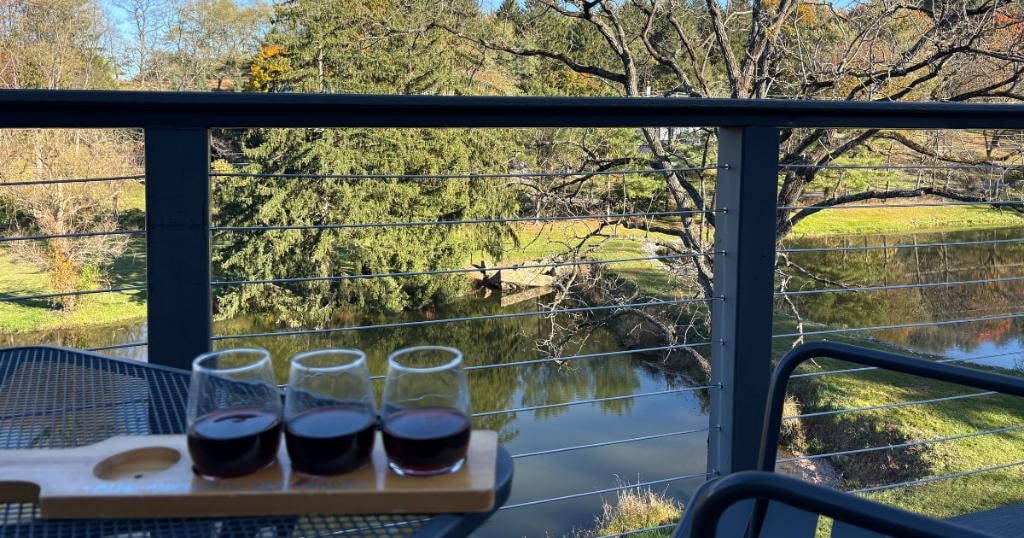
An enjoyable afternoon of wine tasting at Blue Mountain Winery in Pennsylvania, where five very different red wines caught our attention — and all five came home with us.
A Late Sunday Afternoon at Blue Mountain Winery: Exploring Five Pennsylvania Wines
An enjoyable afternoon of wine tasting at Blue Mountain Winery in Pennsylvania, where five very different red wines caught our attention — and all five came home with us!
There is something special about spending a relaxing Sunday afternoon at a winery, especially when you have the opportunity to slow down, enjoy the surroundings, and discover wines that deserve a little more attention. This past Sunday, we did just that with a late-afternoon visit to Blue Mountain Winery in Pennsylvania, where we sampled five different red wines and walked away with a few exciting additions to our growing collection of American wines.
Here at The American Vine, we always enjoy discovering what Pennsylvania wineries have to offer. The state's wine industry continues to provide plenty of opportunities to explore locally produced wines, meet the people behind them, and appreciate the diversity of wines being made throughout the region.
Our visit to Blue Mountain Winery was another enjoyable stop on that journey.
Discovering Blue Mountain Winery: Nearly 40 Years of Pennsylvania Winemaking
Nestled among the rolling hills of Pennsylvania's picturesque Lehigh Valley, Blue Mountain Vineyards & Cellars has been part of the state's wine story for nearly four decades. Located in New Tripoli, at the base of the Appalachian Mountains, the winery offers a scenic setting overlooking vineyards, ponds, and the surrounding countryside. But beyond the beautiful location is an interesting story of determination, passion, and a dream that began with just five acres of grapevines.
The winery's history dates back to 1986, when Joe and Vickie Greff began planting their first vineyard. What started as a hobby eventually became a full-time family business and one of the more established names in Pennsylvania winemaking. Their original five-acre planting consisted primarily of French-American hybrid grapes, including Chambourcin, Vignoles, and Vidal Blanc, varieties well suited to the growing conditions of the eastern United States.
Joe Greff brought an interesting background to winemaking. Before entering the wine business, he had operated a successful insurance company and held a degree in microbiology. His interest in agriculture, combined with his scientific background and love of wine, eventually led him to pursue grape growing and winemaking as a new career.
By 1988, the Greffs had expanded their vineyards and began planting traditional European grape varieties, including Cabernet Sauvignon, Cabernet Franc, Merlot, Pinot Noir, and Chardonnay. These are some of the very same varieties we had the opportunity to taste during our recent visit.
The winery itself was established in 1993, initially operating out of a converted portion of the family's garage. Two years later, in 1995, a dedicated winery facility was constructed, allowing the business to continue growing. Over the years, the vineyards expanded considerably, eventually reaching approximately 50 acres of vines across the family's vineyard operations.
An important part of Blue Mountain's winemaking philosophy has been its emphasis on producing wines inspired by traditional European styles. The Lehigh Valley's combination of well-drained shale and limestone soils, rolling terrain, and seasonal climate reminded Joe Greff of certain wine-growing regions in France, particularly Burgundy and the Loire Valley. This encouraged the winery to focus on producing wines that reflect both the character of the grape and the conditions of the region.
Blue Mountain also earned recognition beyond Pennsylvania. In 2002, USA Today highlighted the winery's 1999 Cabernet Sauvignon in a feature recognizing notable wines from across the country. It was an encouraging achievement for a Pennsylvania producer at a time when East Coast wines were still working to establish a stronger national reputation.
Another milestone came in 2008, when the Lehigh Valley officially received its American Viticultural Area (AVA) designation. This federal recognition helped establish the region's identity as a distinct American wine-growing area and gave wineries like Blue Mountain greater recognition for the geographic origins of their wines.
After decades of building the business, Joe and Vickie Greff retired in 2022, transferring ownership and operations to Josh and Kristy Gier. Although the winery entered a new chapter, its long history remains an important part of its identity.
Today, Blue Mountain Vineyards & Cellars continues to welcome visitors with a diverse selection of red, white, and sweeter wines. Its tasting room and outdoor decks provide opportunities to enjoy the surrounding landscape, while wine tastings, special events, and live entertainment make it a popular destination for those exploring Pennsylvania wine country.
For us, learning about the winery's history makes the tasting experience even more interesting. Knowing that some of the grape varieties we sampled were first planted here nearly four decades ago adds another layer of appreciation to the wines.
And that is something we particularly enjoy about visiting smaller American wineries. Behind every bottle is a story, and Blue Mountain's story is one of ambition, hard work, and a lasting commitment to Pennsylvania wine.
Five Red Wines, Five Different Experiences
During our late Sunday afternoon tasting, we had the opportunity to sample five wines: 2020 Merlot, 2016 Pinot Noir, 2022 Cabernet Sauvignon, 2015 Cabernet Franc, and Rustic Red Blend.
It was an interesting lineup, particularly because it included several different grape varieties and vintages spanning a number of years.
Rather than trying to draw definitive conclusions from a brief winery tasting, we approached the experience as an opportunity to get acquainted with each wine and decide which ones we wanted to explore further.
As it turned out, we liked the selection enough to purchase all five bottles!
2020 Merlot
Merlot has always been a grape worth exploring, particularly because its character can vary considerably depending on where it is grown and how it is made.
Generally known for its approachable texture, dark fruit flavors, and relatively soft tannins, Merlot can range from an easy-drinking everyday red to a serious, age-worthy wine.
Blue Mountain's 2020 Merlot was our first opportunity to explore another Pennsylvania interpretation of this familiar grape. We look forward to spending more time with the bottle and seeing how it develops once opened at home.
2016 Pinot Noir
One of the more intriguing wines in our tasting was the 2016 Pinot Noir.
Pinot Noir can be a challenging grape to grow and produce successfully, but it can also deliver some of the most elegant and interesting red wines.
The fact that we were tasting a Pinot Noir from the 2016 vintage made this bottle particularly interesting. With a decade having passed since the vintage, we are curious to see how the wine has evolved and what characteristics it reveals during a more leisurely tasting.
This is certainly one we are looking forward to revisiting.
2022 Cabernet Sauvignon
Cabernet Sauvignon is one of the world's most recognized red wine grapes, celebrated for its structure, depth, and ability to produce wines with considerable character.
While Napa Valley may dominate conversations about American Cabernet Sauvignon, we are always interested in exploring how the grape performs in other parts of the country.
Blue Mountain's 2022 Cabernet Sauvignon gave us another opportunity to experience this classic variety from an East Coast producer.
We are particularly interested in seeing how this wine presents itself after some time in the glass and alongside a good meal.
2015 Cabernet Franc
Anyone who follows The American Vine knows that we have developed a particular appreciation for Cabernet Franc, especially the exciting examples being produced throughout the eastern United States.
Cabernet Franc has become an important grape for many wineries in Pennsylvania, New York, New Jersey, and Virginia. Its ability to produce aromatic, flavorful, and sometimes beautifully structured red wines makes it one of the most interesting varieties to follow in American wine today.
Naturally, Blue Mountain's 2015 Cabernet Franc caught our attention.
With more than a decade since the vintage, this bottle will be especially interesting to revisit. We are eager to discover how its fruit, acidity, tannins, and any developed characteristics come together when we open it at home.
Of all five bottles, this may be one of the wines we are most curious to explore in greater detail.
Rustic Red Blend
Rounding out our tasting was Blue Mountain's Rustic Red Blend.
This is the one I am most excited about. A unique light-bodied blend of Merlot, Chambourcin, Cabernet Franc, and Pinot Noir
Red blends can be among the most enjoyable wines to explore because they give winemakers the freedom to combine different grape varieties to achieve a particular style, balance, or flavor profile.
Sometimes a well-made blend can be just as memorable as a single-variety wine, and that is part of what makes exploring American wine so enjoyable.
Why We Brought Home All Five Bottles
One thing we have learned during our winery visits is that a quick tasting only tells part of the story.
A small pour at a tasting counter can provide an introduction to a wine, but it doesn't always give you the time or opportunity to appreciate everything that wine has to offer.
That is why we decided to purchase all five bottles.
We want to give each wine the attention it deserves, opening them individually at home, allowing them time to breathe when appropriate, and experiencing how they develop throughout an evening.
We also enjoy discovering how different wines pair with food. Sometimes a wine that seems pleasant during a tasting becomes something truly memorable when enjoyed with the right meal.
Over the coming weeks, we plan to revisit each of these five Blue Mountain wines and share more detailed tasting reviews here at The American Vine.
We will explore their aromas, flavors, texture, balance, and overall drinking experience, all from the perspective of everyday wine enthusiasts who simply enjoy discovering great American wines.
And, as always, we will share what we genuinely think.
Another Reason to Explore Pennsylvania Wine Country
Our visit to Blue Mountain Winery was another reminder of why we enjoy exploring Pennsylvania's growing and diverse wine scene.
From the Lake Erie region in the northwest to the Lehigh Valley and the vineyards scattered throughout the southeastern part of the state, Pennsylvania offers wine enthusiasts plenty of opportunities to discover something new.
For us, visiting wineries is about more than simply tasting wine. It is about exploring different regions, learning about the grapes being grown, appreciating the work that goes into winemaking, and supporting the people and businesses helping shape the future of American wine.
It is also about enjoying the experience itself.
A quiet Sunday afternoon, a few interesting glasses of wine, and the anticipation of opening some new bottles at home — sometimes that is all you need for a memorable winery visit.
Final Thoughts: Five Bottles and More Discoveries Ahead
Our late Sunday afternoon at Blue Mountain Winery turned into another enjoyable stop in our continuing exploration of American wine.
We arrived ready to sample a few wines and left with five bottles: the 2020 Merlot, 2016 Pinot Noir, 2022 Cabernet Sauvignon, 2015 Cabernet Franc, and Rustic Red Blend.
Each represents another opportunity to learn something about Pennsylvania winemaking and to discover how these familiar red wine styles express themselves through a different producer.
And the best part? Our tasting experience isn't over yet.
As we open these bottles over the coming weeks, we will be sharing individual tasting notes and reviews, including which wines impressed us most and which ones we would happily purchase again.
So stay tuned to The American Vine. There is plenty more Pennsylvania wine to explore, and we have five very good reasons to keep tasting!
Cheers to discovering American wine, one winery and one bottle at a time!
The American Vine — Exploring America's Wines, Wineries, and the People Behind Them.