
Frog's Leap Winery Visit — Organic Farming, Dry-Farmed Vines, and Some of Napa's Most Honest Wines
Frog's Leap in Rutherford is the rare Napa winery that leads with philosophy as much as prestige. A visit here is a lesson in what Napa Valley tasted like before the scores got so big — and a reminder that restraint can be its own kind of luxury.
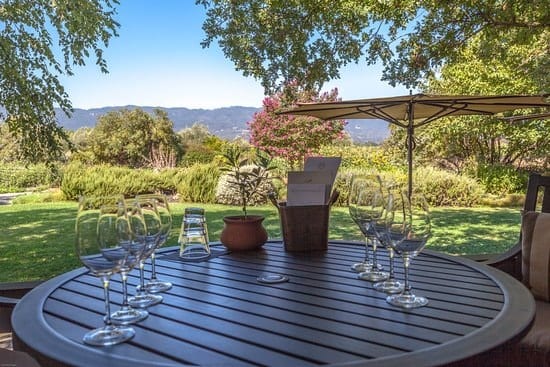
Frog's Leap Winery Visit — Organic Farming, Dry-Farmed Vines, and Some of Napa's Most Honest Wines
There is a version of Napa Valley that gets talked about less than it deserves — the one that existed before 100-point scores and $400 bottles became the default conversation. Frog's Leap, tucked into the Rutherford bench on a 150-acre certified organic farm, is a living argument that this version of Napa never went away. It just got quieter. I visited on a warm August afternoon, and I left with a full notebook, a clearer sense of what Rutherford actually tastes like, and a deep appreciation for a winery that has never once tried to be something it isn't.
Getting There
Frog's Leap sits at 8815 Conn Creek Road in Rutherford, a few minutes east of Highway 29 on a stretch of road that still feels agricultural rather than touristic. The entrance is marked by a red barn — a real one, not a decorative one — and the property opens up into a working farm with vegetable gardens, fruit trees, chickens, and row after row of dry-farmed vines. It looks nothing like the stone-and-steel estates that dominate the Silverado Trail. That is entirely the point.
The winery was founded in 1981 by John Williams, who had been making wine at Stag's Leap Wine Cellars and wanted to do something smaller, more personal, and more rooted in the land. The name came from a leased property on a frog farm. The irreverence stuck. Frog's Leap has always been a winery that takes the farming seriously and the pretension lightly — their tagline, "Time's fun when you're having flies," has been on the label for decades.
The Farm First
Before the tasting, our guide walked us through the property, and this is where Frog's Leap separates itself from almost every other Napa winery I've visited. The farm is certified organic and has been since 1988 — one of the earliest in Napa Valley to make that commitment. More unusually, the vines are dry-farmed, meaning they receive no irrigation. In a valley where drip irrigation is nearly universal, this is a radical choice.
John Williams has argued for years that irrigation produces vines that are dependent on the grower, with shallow root systems that chase surface water. Dry-farmed vines are forced to send roots deep into the soil to find moisture, which produces smaller berries, lower yields, and — in Williams's view — wines with more genuine sense of place. Walking the rows, you can see the difference. The vines are gnarled and low-vigor, the clusters small and loose. They look like they've been working hard for a long time.
The vegetable and herb gardens supply the winery's kitchen and are tended with the same care as the vines. The chickens roam between the rows. The whole property has the feel of a place that is genuinely trying to close the loop between farming and table — not as a marketing concept, but as a way of operating.
The Tasting Room
The tasting takes place inside the historic red barn, which has been converted into a warm, unpretentious space with exposed wood beams, long communal tables, and natural light coming through the barn doors. There is no marble, no dramatic cave, no theatrical staging. There are wines, glasses, and people who clearly love talking about both.
We did the Estate Tasting, which moves through five wines and is guided rather than self-paced. The pace is unhurried. The conversation is substantive. Our guide knew the farming history of every wine on the table and was happy to go deep on dry farming, organic certification, and the particular character of Rutherford Cabernet. This is the kind of tasting where you learn something.
Tasting Notes
2023 Sauvignon Blanc, Napa Valley Frog's Leap's Sauvignon Blanc is one of the most consistent wines in their lineup and one of the best values in Napa. The 2023 opens with fresh grapefruit, white peach, and a faint grassy note that grounds it without tipping into herbaceous. The palate is bright and clean, with good weight from partial barrel fermentation and a finish that stays lively. This is not a showy wine. It is a precise, honest one — the kind you reach for on a warm evening without overthinking it. Drink now through 2026.
2022 Zinfandel, Napa Valley This surprised me. Napa Zinfandel can easily tip into jammy excess, but Frog's Leap's version is restrained and structured in a way that feels almost Rhône-like. The 2022 shows dried cherry, black pepper, a hint of tobacco, and a savory earthiness that I suspect comes directly from the dry-farmed vines. The tannins are present but polished. The alcohol is a measured 14.5% — notable for Zinfandel. This is a food wine, not a dessert wine. Drink 2024–2029.
2021 Merlot, Napa Valley Merlot is having a quiet comeback in Napa, and this is a good example of why. The 2021 is plush but not soft, with dark plum, mocha, a touch of dried herb, and a mid-palate richness that fills out the frame without going heavy. The finish is medium-long with fine-grained tannins. It drinks well now but has the structure to develop for another four or five years. Drink 2024–2030.
2021 Cabernet Sauvignon, Rutherford This is the wine that best expresses what Frog's Leap is about. The 2021 Rutherford Cab is not a blockbuster. It is not trying to be. What it is, is a genuinely terroir-driven Napa Cabernet — one where you can taste the Rutherford dust, the gravelly loam, the particular warmth of this bench without the fruit being pushed to the front of the line. Blackcurrant, cedar, dried sage, a hint of graphite. The tannins are firm and well-integrated. The finish is long and savory. This is a wine for the table, not the trophy shelf. Drink 2025–2035.
2020 Cabernet Sauvignon, Rutherford (Library Pour) The library pour was the highlight of the tasting. Three years of bottle age have done exactly what you'd hope — the fruit has settled into something more complex and secondary, the tannins have softened into silk, and the Rutherford character has deepened into something that genuinely reminded me of a well-aged Bordeaux. This is the argument for patience with Frog's Leap Cabernet. If you have bottles in your cellar, leave them alone for a few more years.
What Makes Frog's Leap Different
Most Napa wineries, even the excellent ones, are selling an experience of luxury. Frog's Leap is selling something harder to define — a point of view. John Williams has spent forty-plus years arguing that the best Napa wines come from healthy soil, dry-farmed vines, and a winemaking hand that knows when to get out of the way. The wines back him up.
The tasting is also priced differently from most of Napa. The Estate Tasting runs $45 per person, which is genuinely modest by current Napa standards, and the wines themselves are priced to be drunk rather than collected. The Sauvignon Blanc is under $30. The Rutherford Cabernet is around $65. These are not wines that require a special occasion.
Practical Details
Address: 8815 Conn Creek Road, Rutherford, CA 94573
Reservations: Required. Book through the Frog's Leap website at least a week in advance — they fill up, especially on weekends.
Tasting options: Estate Tasting ($45), Library Tasting ($75), and private experiences available by arrangement.
Best time to visit: Weekday mornings in spring or fall. Summer weekends are busy and warm. The barn stays cool, but the walk through the farm is best when the heat is manageable.
Don't miss: Ask about the dry-farming program specifically. The guides are knowledgeable and the conversation is worth having. And if the Sauvignon Blanc is pouring, buy a few bottles before you leave — it's one of the best values in Napa Valley.
The Bottom Line
Frog's Leap is not the most famous winery in Napa Valley. It is not trying to be. What it is, is one of the most coherent — a place where the farming, the winemaking, and the hospitality all tell the same story. That story is about restraint, about the land, and about what Napa Cabernet tastes like when it isn't being pushed to its limits. If you've been to Napa and come away feeling like everything was a little too big, a little too polished, a little too much — Frog's Leap is the antidote. Go.
Visited August 2026. All wines tasted on-site. Tasting fee paid by the author.
Explore Topics
Written by
Chuck
Chuck Hoeffler is the founder and editor of The American Vine. He loves tasting and writing about American wine, with a particular focus on regions and wineries that deserve more attention than they typically receive.


