
How Oak Ageing Shapes Wine
From vanilla and spice to silkier tannins, learn how oak ageing changes a wine's aroma, flavor, texture, and long-term structure.
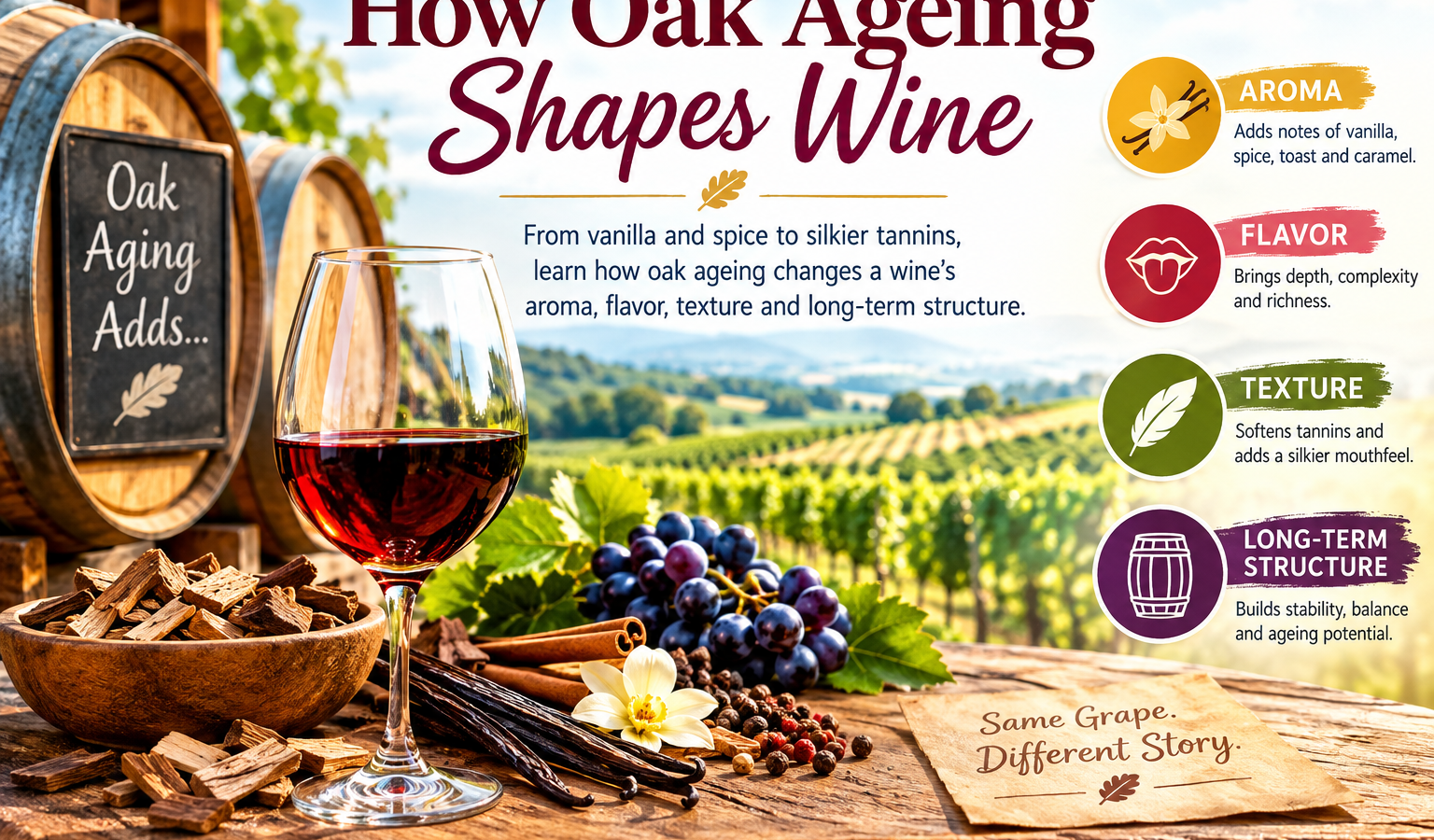
Oak can be one of the most recognizable signatures in wine, yet it is rarely just about a wine tasting “oaky.” A well-chosen barrel can make a young red feel more complete, round out a white wine without hiding its freshness, or give a serious bottle the framework to develop over years. Used without restraint, though, oak can flatten a wine into a blur of toast, vanilla, and sweetness.
Understanding oak ageing gives you a clearer way to taste what is in your glass. You will notice not only the familiar aromas it contributes, but also the subtler changes it brings to texture, tannin, and a wine’s journey from harvest to bottle.
What happens when wine meets oak
After fermentation, a winemaker may move wine into oak barrels, large oak casks, or oak vessels of another shape. The wine rests there for weeks, months, or sometimes years. During that time, it has contact with the wood itself and a tiny, controlled exchange of oxygen through the barrel staves.
Oak is not a seasoning sprinkled into finished wine. It is part of maturation. The barrel can contribute aromatic compounds, soften the edges of young tannins, and influence how the components of the wine knit together.
The effect depends on the wine before it enters the barrel. A delicate, high-acid Riesling may need little or no oak to remain vivid. A concentrated Cabernet Sauvignon may have the fruit, tannin, and acidity to absorb new barrels gracefully. Good oak work starts with that match rather than a fixed recipe.
Aroma: where oak first announces itself
Many of the scents associated with barrel-aged wine come from compounds in oak released into the wine. Their expression changes with wood origin, seasoning, and toast level, but several patterns are common.
- Vanilla and baking spice often come from oak lactones and related compounds. Think vanilla bean, clove, nutmeg, and sweet pastry.
- Cedar, sandalwood, and cigar box notes tend to feel more savory and refined, particularly as red wines evolve in bottle.
- Toast, coffee, cocoa, and smoke can appear when barrels receive a heavier toast during production.
- Coconut and dill can be more noticeable in wines aged in American oak, especially when new barrels are used.
These aromas should sit alongside the wine’s fruit rather than erase it. In a balanced Chardonnay, ripe apple, citrus, or stone fruit may be framed by hazelnut and vanilla. In Cabernet, blackcurrant and plum may be joined by cedar and cocoa. If you smell only char, butter, or raw lumber, the oak may be leading the conversation too loudly.
Flavor: oak changes more than the nose
Because aroma and flavor work together, oak-derived notes are easy to taste as well as smell. New oak can suggest sweetness even when a wine is completely dry, thanks to vanilla, caramel-like toast, and warm spice. This is why a dry red can seem plush or a dry white can feel almost creamy.
Oak also shapes flavor by moderating perception. A wine with bright acidity can seem broader after time in barrel. Firm tannin can seem less angular. Fruit may read as darker, riper, or more integrated when it is set against notes of toast and spice.
This does not mean oak makes every wine better. In wines built around pure floral perfume, brisk acidity, or transparent site character, barrel flavor can obscure the very qualities that make the wine distinctive. Stainless steel and neutral vessels are valuable precisely because they let those qualities remain direct.
Texture and structure: the quieter work of a barrel
The most important effects of oak are often not the most obvious. Barrels admit very small amounts of oxygen over time. This slow exposure encourages tannins and color compounds to link together, a process that can make a young wine feel smoother and more cohesive.
For red wine, that maturation can turn a hard, grippy tannic feel into something more polished. The tannin does not simply disappear; it changes shape. A young Cabernet may begin with a firm, drying grip and later feel like fine cocoa powder or suede. This is one reason oak ageing is common for structured grapes such as Cabernet Sauvignon, Syrah, and Nebbiolo.
For white wine, contact with oak can create a broader mid-palate and a sense of weight. If the wine goes through malolactic conversion, its sharper malic acid may also become softer lactic acid, adding a creamy texture. That creaminess is not caused by oak alone, but oak ageing and malolactic conversion are often used together, especially in fuller-bodied Chardonnay.
The maturation journey from cellar to bottle
Oak ageing is a stage, not the finish line. A typical maturation journey has several overlapping steps.
Early months: settling and integration
Freshly fermented wine can be exuberant, raw, or disjointed. Its fruit is vivid, but tannins, alcohol, acidity, and oak influence have not yet found a common rhythm. Early barrel time allows sediment to settle and gives the winemaker a chance to monitor each lot.
Mid-maturation: building harmony
As months pass, oxygen exchange and wood contact begin to shape the wine more clearly. New-barrel aromas are often most obvious at this point. Winemakers may rack the wine, moving it off sediment, blend barrels of different ages, or adjust the length of ageing based on the wine’s development.
Bottling and bottle age: letting the parts settle
Bottling stops direct wood contact, but the wine continues to evolve. A bottle may need time for the flavors of fruit, oak, acid, and tannin to re-knit after bottling. With age, obvious vanilla and toast can become more integrated, while tertiary aromas such as leather, tobacco, dried herbs, and forest floor may emerge.
A wine does not need to age in barrel to age well in bottle, and barrel age is not a guarantee of longevity. Balance, acidity, concentration, tannin, and storage conditions all matter.
The factors that determine oak impact
There is no single “oak-aged” flavor. The following choices can dramatically change the result.
Oak origin and grain
French oak is often associated with subtle spice, cedar, and a fine-grained tannin profile. American oak can be more assertive, bringing vanilla, coconut, and sweet spice. Hungarian and Eastern European oak can offer aromatic spice and structure that sits somewhere between those broad stereotypes.
Grain matters too. Tighter-grained oak generally allows slower extraction and oxygen transfer, while wider grain can make its influence more immediate. These are tendencies, not guarantees; cooperage style matters enormously.
New versus neutral barrels
A new barrel has the strongest aromatic and structural contribution. Once a barrel has been used several times, much of its flavor impact fades. These older “neutral” barrels still offer gentle oxygen exchange without adding a strong oak signature.
Many thoughtful producers use a mix. A wine might spend time in 20 percent new oak and 80 percent neutral barrels, gaining texture and harmony while keeping its fruit in focus.
Toast level
Before a barrel is assembled, its interior is heated. Light toast tends to preserve more fresh wood spice and subtle sweetness. Medium toast can bring richer vanilla, caramel, and baking spice. Heavy toast can move toward espresso, dark chocolate, smoke, and char.
Toast level needs to fit the wine. A powerful Syrah may carry a deeper toast well, while a delicate Pinot Noir can lose its perfume if the barrel character is too smoky.
Barrel size, shape, and ageing time
Small barrels have a higher wood-to-wine ratio than large casks, so their influence is generally greater. A standard 225-liter barrique will affect wine more quickly than a much larger foudre. The longer wine stays in an active new barrel, the more opportunity it has to extract flavor and tannin.
Long ageing is not automatically better. A winemaker may taste a wine frequently and move it out of barrel once it has gained enough structure and integration.
The grape, vintage, and winemaking style
The wine itself sets the limit. Ripe fruit and abundant tannin can support more oak than a light-bodied, aromatic wine. A cool vintage with lively acidity may benefit from the rounding effect of barrel age, while a warm, very ripe vintage may need restraint to avoid becoming heavy.
Lees contact, stirring, malolactic conversion, alcohol level, and blending decisions all shape what you perceive as “oak.” The barrel is one instrument in a larger cellar orchestra.
How to taste oak with more confidence
When you try a barrel-aged wine, pause before naming specific flavors. Start with four questions:
- What is the fruit character? Identify the grape’s primary expression first: citrus, apple, cherry, blackberry, plum, and so on.
- What seems to come from the barrel? Look for vanilla, clove, cedar, toast, coffee, cocoa, smoke, or coconut.
- How does the texture feel? Is it crisp and linear, creamy and broad, firm and grippy, or smooth and velvety?
- Does the oak support the wine? The best answer is usually yes when you can still recognize the fruit, place, and grape without effort.
Taste a lightly oaked and an unoaked example of the same grape when you can. The contrast is the fastest teacher. You may find that you enjoy different levels of oak in different wines and occasions.
For a real-world example, see how these questions played out across eight different reds in our visit to Cellar Beast Winehouse, a Pennsylvania winery that matures its West Coast-sourced wines in French and American oak.
The goal is balance, not a barrel checklist
Oak ageing is neither a mark of quality nor something to avoid on principle. It is a tool that can bring perfume, depth, texture, and age-worthy structure to wine when used with precision. At its best, you do not think, “This tastes like a barrel.” You think the wine feels complete.
The next time you open a barrel-aged bottle, give it a few minutes in the glass. Notice how its aromas shift, how the tannins sit on your palate, and whether fruit and oak move together. That small act of attention turns oak from a vague tasting-note word into a clearer part of the wine’s story.
Related reading: American Wine Production Methods · Wine Aging Potential: Which American Wines Are Worth Cellaring? · What Is Terroir? · How to Taste Wine
Explore Topics
Written by
Chuck Hoeffler
Chuck Hoeffler is the founder and editor of The American Vine. He loves tasting and writing about American wine, with a particular focus on regions and wineries that deserve more attention than they typically receive.


