A Visit to Caymus Vineyards: Napa at Its Most Generous
Caymus is one of Napa's most beloved names — and a visit to their Rutherford estate shows exactly why. Here's what the tasting experience is really like.

A Visit to Caymus Vineyards: Napa at Its Most Generous
There are wineries you visit because they're on a list, and there are wineries you visit because you genuinely love what's in the bottle. For me, Caymus has always been the latter. I've been drinking their Special Selection for years — it's the kind of Cabernet that makes you stop mid-sip and just appreciate the glass in your hand. So when I finally made it out to their estate in Rutherford, I wasn't just checking a box. I was curious to see if the place matched the wine.
It did. And then some.
The Wagner Family: Five Decades in Rutherford
Before you visit Caymus, it helps to understand the family behind it. Chuck Wagner's parents, Charlie and Lorna Wagner, founded the winery in 1972 on land that had been in the family since the 1940s. They were among the early believers in Napa Valley's potential for world-class Cabernet — at a time when most of the wine world still considered California a novelty.
Chuck Wagner took over winemaking in the late 1970s, while still a teenager, and has been at the helm ever since. He is now in his 60s, and his children — Charlie, Jenny, and Joe — are all involved in the business. The winery has grown from a small family operation into one of Napa's most recognized names, but it has never lost the personal, family-run character that defines it.
That continuity matters. When you taste a Caymus wine, you are tasting five decades of accumulated knowledge about a specific piece of Napa Valley ground. That is not something you can replicate.
Getting There: Rutherford in the Heart of Napa
Caymus sits in Rutherford, one of Napa Valley's most storied appellations. If you've heard the phrase "Rutherford dust" — that earthy, almost chocolatey quality that shows up in wines grown here — this is where it comes from. The phrase was coined by winemaker André Tchelistcheff, who spent decades at Beaulieu Vineyard just down the road.
What Is Rutherford Dust?
"Rutherford dust" is not a marketing term — it is a genuine sensory phenomenon that winemakers and critics have been describing for decades. The best explanation is geological: Rutherford's soils are a mix of well-drained alluvial fans, volcanic ash, and clay, with a distinctive dusty, earthy quality that shows up in the wines as a savory, almost tobacco-like note on the mid-palate.
The Rutherford Bench — the slightly elevated, well-drained strip of land running along the western side of Highway 29 — is where the finest Rutherford Cabernets come from. Caymus's estate vineyards sit on this bench.
The drive in from Highway 29 is quintessential Napa: flat valley floor, vines stretching in every direction, the Mayacamas Mountains rising to the west. It's the kind of scenery that makes you feel like you're exactly where you're supposed to be.
The winery itself is understated from the outside — no grand château, no ostentatious gates. Just a working estate that's been in the Wagner family since 1972. That unpretentiousness turns out to be very much on brand.
Planning Your Visit: Practical Information
Address: 8700 Conn Creek Road, Rutherford, CA 94573
Hours: Open daily, 10am–4pm. Tastings are by appointment only.
Reservations: Book at least two weeks in advance for weekends; one week for weekdays. Reservations fill quickly during harvest season (September–October) and summer. Book at caymus.com.
Tasting formats: Caymus offers several tasting experiences, ranging from a standard seated tasting ($75 per person) to a more in-depth library tasting with older vintages ($150 per person). The standard tasting covers 4–5 wines and runs about 90 minutes.
Getting there: Caymus is about 10 minutes north of the town of Napa on Highway 29, then a short drive east on Conn Creek Road. Parking is easy and free.
What to wear: Smart casual. This is not a formal winery, but it is a serious one. Leave the flip-flops at the hotel.
What to bring: An appetite. The tasting is generous, and you will want food afterward. Several excellent restaurants are within a 10-minute drive.
Nearby wineries: Beaulieu Vineyard (BV) is just down the road and worth a stop for its historical significance. Inglenook (formerly Niebaum-Coppola) is a 10-minute drive north and offers a dramatically different aesthetic experience. Frog's Leap, one of Napa's most charming estates, is also nearby.
The Tasting Experience
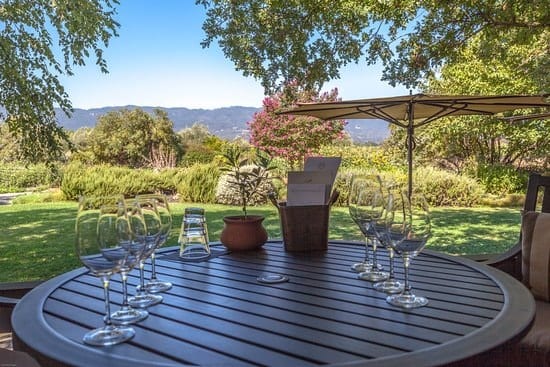
Caymus does seated, appointment-based tastings, which I'd strongly recommend booking in advance — they fill up fast, especially on weekends. Our host was warm, knowledgeable, and refreshingly free of the kind of wine snobbery that can make Napa feel intimidating. This is a place that wants you to enjoy yourself.
The tasting moved through several wines, and I took notes on all of them. Here's what stood out.
Caymus Napa Valley Cabernet Sauvignon (~$90)
This is the wine that built the brand — the "regular" Caymus Cab that somehow manages to be both approachable and genuinely impressive. The 2022 vintage we tasted was rich and plush, with dark cherry, mocha, and a hint of vanilla from the oak. The tannins are soft and generous, which is Caymus's signature style. It's not a wine that demands patience; it's a wine that rewards you right now.
Tasting notes: Deep ruby with a garnet rim. On the nose: dark cherry, blackberry, mocha, and a hint of vanilla from the oak. On the palate: full-bodied, with soft, polished tannins and generous fruit. The finish is long and warming, with a slight cocoa note. Approachable now; will hold for 5–8 years.
At around $90 a bottle, it's not cheap — but for Napa Cabernet of this quality and consistency, it's one of the better values in the valley.
Caymus Special Selection Cabernet Sauvignon (~$175)
This is the one I came for. The Special Selection is made only in the best vintages from the finest barrels, and it shows. The 2019 we tasted was extraordinary — deeper, more structured, and more complex than the Napa bottling, with layers of blackcurrant, dark chocolate, dried herbs, and a long, velvety finish that seemed to go on forever.
Tasting notes: Near-opaque ruby-black. On the nose: blackcurrant, dark chocolate, dried herbs, a hint of cedar and graphite. On the palate: full-bodied and dense, with firm but polished tannins and a mineral quality that the Napa bottling lacks. The finish stretches past 45 seconds. This wine needs another 3–5 years to fully open up, but it is already extraordinary.
If you've never had a Special Selection, tasting it at the winery — where the staff can walk you through the story behind it — is the ideal introduction. It's a wine that earns its reputation.
Drinking window: 2024–2035. Decant for at least an hour if opening now.
Mer Soleil Chardonnay Silver (~$25)
I wasn't expecting to be wowed by a white wine at Caymus, but the Mer Soleil Silver Chardonnay — made from their Santa Lucia Highlands fruit — was a genuine surprise. Unoaked and stainless-steel fermented, it's crisp, bright, and full of citrus and green apple. A complete departure from the big, buttery California Chardonnay style, and all the better for it.
Tasting notes: Pale straw with green highlights. On the nose: lemon zest, green apple, a hint of white peach. On the palate: light-to-medium bodied, with bright acidity and clean, precise fruit. No oak, no butter — just pure, fresh Chardonnay. Excellent value at $25.
Emmolo Merlot (~$45)
The Emmolo label is a side project from the Wagner family, focusing on Merlot from Napa and Lodi. The Merlot is plush and generous — dark plum, mocha, a hint of vanilla — with soft tannins and an approachable style. Not as complex as the Special Selection, but a very good wine at the price.
The Hospitality
What struck me most about Caymus wasn't any single wine — it was the feeling of the place. The staff treated every guest like they'd been expected, like the visit mattered. There was no rush, no sense that they were trying to move you through and sell you a case. They poured generously, answered every question thoughtfully, and seemed genuinely proud of what they make.
Chuck Wagner, the winemaker who has run Caymus since the beginning, has built something rare in Napa: a winery that's both commercially successful and deeply personal. You feel that in every interaction.
What to Buy
If you're visiting and want to take something home, here's my honest advice:
- The Special Selection is worth every penny if you have a special occasion in mind or a cellar to stock. Buy it here if you can — allocations are limited and it often sells out before it reaches retail.
- The Napa Valley Cab is the everyday bottle. It's consistent, crowd-pleasing, and genuinely good. A reliable choice for dinner parties or gifting.
- Mer Soleil Silver is the sleeper pick. If you like clean, food-friendly whites, grab a bottle. It's not what people expect from Caymus, which makes it all the more fun to share.
- Emmolo Merlot is worth picking up if you want something different. Good value and a nice contrast to the Cabernet-focused lineup.
Vintage Guide: Which Special Selection to Buy
If you are buying Special Selection to cellar, here is a quick guide to recent vintages:
- 2019: Exceptional. One of the finest Special Selections in recent memory. Buy and hold until 2026+.
- 2018: Very good. More opulent and immediately approachable than the 2019. Drink now through 2028.
- 2017: Good. A slightly lighter vintage due to early harvest conditions. Drink now.
- 2016: Outstanding. Classic Napa vintage with excellent structure. Still improving; hold until 2025+.
- 2015: Excellent. Ripe and generous, with good aging potential. Approaching peak now.
Caymus in the Context of Napa Cabernet
Caymus occupies an interesting position in the Napa hierarchy. It is not a cult producer in the traditional sense — the wines are widely available and produced in significant quantities. But the quality is consistently high, and the Special Selection has earned its reputation as one of Napa's benchmark Cabernets.
The style is distinctly Caymus: generous, plush, and immediately appealing. This is not the most intellectual Napa Cabernet — it does not have the mineral complexity of a Stag's Leap Cask 23 or the structural precision of a Harlan Estate. But it is one of the most reliably pleasurable, and that counts for a great deal.
For visitors who are new to Napa wine, Caymus is an ideal starting point. The wines are approachable, the hospitality is excellent, and the experience gives you a clear sense of what Napa Cabernet is all about.
Final Thoughts
Caymus Vineyards is one of those places that lives up to its reputation — not because it tries to impress you, but because it doesn't have to. The wines are excellent, the setting is beautiful, and the hospitality is the kind that makes you want to linger. I left with a few bottles, a lot of notes, and a renewed appreciation for what Napa Cabernet can be when it's done right.
If you're planning a trip to the valley and you're a Cab lover, put Caymus on the list. You won't regret it.
For a contrasting Napa experience that leans into food and cave aging, our B Cellars visit is worth reading before you book. And if you're weighing whether to spend your time in Napa or cross the mountains into Sonoma, our Sonoma vs Napa Valley comparison lays out the differences honestly. For value-focused Napa drinking between visits, see our picks for three Napa Cabs under $50.
Caymus Vineyards is located at 8700 Conn Creek Road, Rutherford, CA. Tastings are by appointment. Visit caymus.com for reservations.
Explore Topics
Written by
Chuck
Chuck Hoeffler is the founder and editor of The American Vine. He loves tasting and writing about American wine, with a particular focus on regions and wineries that deserve more attention than they typically receive.