How to Find Great American Wine Under $30: A Buyer's Guide
The best American wine doesn't have to cost $100. Knowing which regions, which grapes, and which producers consistently deliver quality at $30 and under is one of the most practical skills a wine lover can develop — and the options are better than ever.

How to Find Great American Wine Under $30: A Buyer's Guide
The American wine market has a perception problem. The wines that get the most attention — the Napa cult Cabernets, the single-vineyard Oregon Pinots, the limited-production natural wines — are expensive. Sometimes very expensive. And the coverage those wines receive can create the impression that quality American wine requires a significant financial commitment.
It doesn't. Some of the most interesting and most enjoyable American wines available today cost less than $30. They come from regions that don't carry the premium of Napa or Sonoma, from grape varieties that haven't yet attracted the attention of collectors, and from producers who have made a deliberate choice to make quality wine accessible.
This guide covers the value regions, the value grapes, the label-reading skills that help you identify quality at any price point, and specific producers and bottles worth seeking out.
The Value Regions
Lodi, California
Lodi is one of the most underrated wine regions in America. Located in the Central Valley east of San Francisco, Lodi has a warm, dry climate moderated by afternoon breezes off the Sacramento-San Joaquin Delta — the so-called "Lodi Breeze" that keeps the region cooler than its latitude would suggest. The region is home to some of the oldest Zinfandel vines in America, many planted in the late 19th century, and produces wines of genuine character at prices that are a fraction of what comparable quality costs in Napa or Sonoma.
What to look for: Old vine Zinfandel is Lodi's signature. Look for wines labeled "old vine" from producers like Turley Wine Cellars (their Juvenile Zinfandel is a benchmark value), Bedrock Wine Co., and Michael David Winery. Lodi also produces excellent Petite Sirah, Cabernet Sauvignon, and increasingly interesting white wines from Albariño and Vermentino.
Paso Robles, California
Paso Robles is a large and diverse appellation in San Luis Obispo County, with a wide range of microclimates and soil types that support an unusually broad range of grape varieties. The western side of the appellation, closer to the Pacific, is cooler and produces elegant Rhône-style wines. The eastern side is warmer and produces richer, more concentrated reds.
What to look for: Paso Robles Zinfandel, Syrah, and Grenache consistently offer excellent value. Producers like Tablas Creek (their entry-level Patelin de Tablas is one of the best values in American wine), Epoch Estate, and Linne Calodo make wines that compete with bottles costing twice as much. Paso Robles Cabernet Sauvignon from the Adelaida District is also worth exploring.
Finger Lakes, New York
The Finger Lakes is America's most exciting white wine region, and it is also one of its best value regions. The combination of a cool climate, high natural acidity, and a growing community of talented winemakers produces wines — particularly Riesling — that compete with German and Alsatian examples costing significantly more.
What to look for: Dry and off-dry Riesling from producers like Dr. Konstantin Frank, Hermann J. Wiemer, Ravines Wine Cellars, and Red Newt Cellars. Most of these producers have entry-level Rieslings in the $18–$25 range that are genuinely excellent. Finger Lakes Cabernet Franc is also worth exploring — the region's cool climate produces a leaner, more aromatic style than Virginia or Long Island.
Virginia
Virginia wine has improved dramatically over the past decade, and the value tier has improved along with the premium tier. The state's signature grape — Cabernet Franc — produces wines of genuine distinction at prices well below comparable quality from California or the Pacific Northwest.
What to look for: Entry-level Cabernet Franc and Merlot-based blends from producers like Barboursville Vineyards, King Family Vineyards, and Pollak Vineyards. Virginia Viognier — the state's signature white grape — is also worth exploring, with several producers making excellent examples in the $20–$28 range.
Washington State (Columbia Valley)
Washington's Columbia Valley appellation covers a vast area and produces wines at every price point. The entry-level tier — wines labeled simply "Columbia Valley" rather than a more specific sub-appellation — offers excellent value, particularly for Riesling, Merlot, and Cabernet Sauvignon.
What to look for: Columbia Valley Riesling from producers like Chateau Ste. Michelle (their Eroica Riesling, made in collaboration with Dr. Loosen, is one of the best values in American white wine at around $20) and Pacific Rim. Columbia Valley Merlot and Cabernet Sauvignon from producers like L'Ecole No. 41 and Barnard Griffin offer excellent quality at accessible prices.
The Midwest and Northeast: Hybrid Grape Country
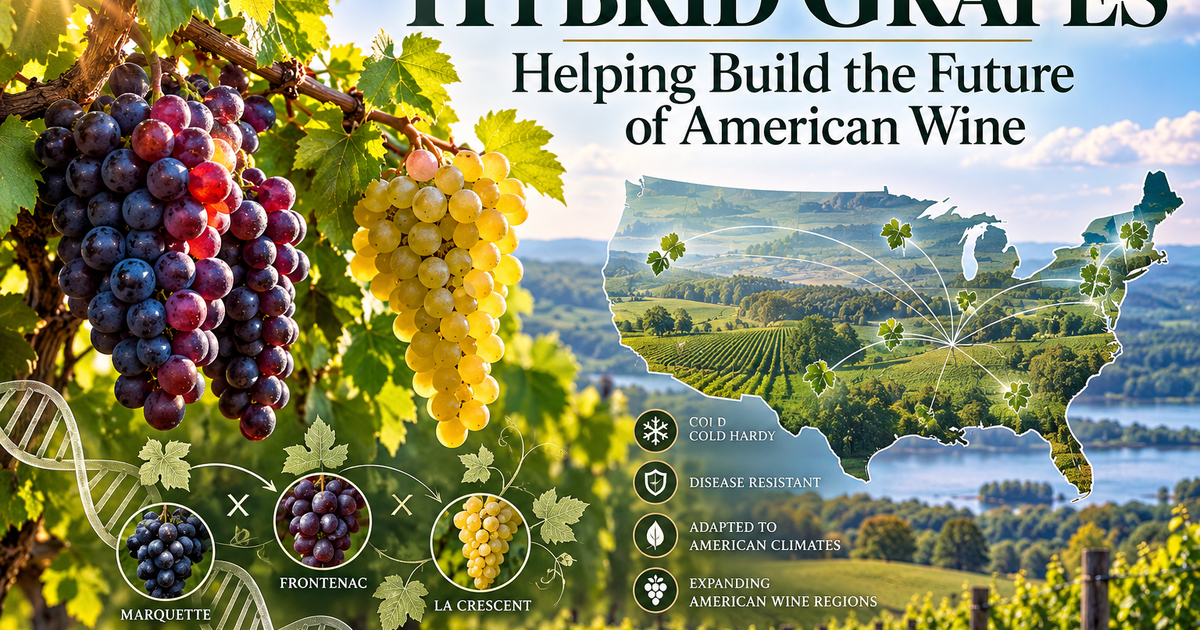
The hybrid grape regions of the Midwest and Northeast — Minnesota, Wisconsin, Michigan, Iowa, and the emerging wine states of New England — offer some of the most distinctive and most affordable wines in America. Varieties like Marquette, Frontenac, La Crescent, and Chambourcin produce wines with genuine character that are almost entirely unknown outside their home regions.
What to look for: Marquette from Minnesota producers like Alexis Bailly Vineyard and Cannon River Winery. Chambourcin from Maryland, Virginia, and Pennsylvania producers. La Crescent and Frontenac Gris from Wisconsin and Iowa producers. These wines are rarely found outside their home states, which makes them excellent discoveries for wine travelers and online shoppers willing to explore.
The Value Grapes
Some grape varieties consistently offer better value than others, regardless of region. Understanding which grapes are underpriced relative to their quality is one of the most useful skills a value-conscious wine buyer can develop.
Zinfandel is chronically underpriced relative to its quality. Old vine Zinfandel from Lodi, Dry Creek Valley, and Paso Robles — wines made from vines that are 50, 80, or 100 years old — routinely sells for $20–$35, a fraction of what comparable quality costs in Cabernet Sauvignon. The grape's unfashionable reputation (it was associated with sweet, cheap White Zinfandel for decades) has kept prices low even as quality has risen dramatically.
Cabernet Franc is similarly underpriced. While Cabernet Sauvignon commands premium prices in every American wine region, Cabernet Franc — a more elegant, aromatic, food-friendly grape — is often available at half the price. Virginia, Long Island, and the Finger Lakes all produce excellent Cabernet Franc in the $20–$35 range.
Riesling is perhaps the most underpriced quality grape in America. German and Alsatian Riesling commands high prices and critical respect; American Riesling — particularly from the Finger Lakes and Washington State — is often dismissed as a sweet, simple wine. The reality is that the best American Rieslings are world-class wines available at bargain prices.
Grenache and Rhône varieties from Paso Robles and the Santa Ynez Valley offer excellent value. The warm, dry climate of these regions is ideal for Grenache, Syrah, Mourvèdre, and Roussanne, and the wines are consistently underpriced relative to comparable quality from France's Rhône Valley.
Petite Sirah is a thick-skinned, deeply colored grape that produces wines of extraordinary concentration and aging potential at prices well below comparable Cabernet Sauvignon. Lodi and Paso Robles are the primary regions, with producers like Turley, Michael David, and Stags' Leap Winery making excellent examples in the $20–$30 range.
Reading the Label for Value Signals
Knowing how to read a wine label helps you identify quality at any price point. Our full guide to reading a wine label covers this in detail, but here are the key value signals:
Appellation specificity is a quality signal. A wine labeled with a specific AVA (American Viticultural Area) — "Lodi," "Finger Lakes," "Columbia Valley" — must contain at least 85% of grapes grown in that appellation. A wine labeled simply "California" or "American" can be made from grapes grown anywhere in the state or country, and is generally less distinctive.
Estate bottled means the winery grew the grapes and made the wine on the same property. Estate wines are not always better than non-estate wines, but the designation indicates a level of control over the raw material that is associated with quality.
Old vine is not a legally defined term in America, but it is generally used to indicate vines that are at least 25–30 years old. Old vine wines tend to have more concentration and complexity than young vine wines, and they are often available at prices that do not fully reflect their quality advantage.
Alcohol level can be a quality signal at the value tier. Very high alcohol (15%+) in a red wine often indicates overripe fruit and a hot, unbalanced style. Moderate alcohol (13–14.5%) in a red wine often indicates better balance and more food-friendliness.
Specific Bottles Worth Seeking Out
These are wines that consistently deliver quality at or under $30 and are available in most well-stocked wine shops or online:
Turley Wine Cellars Juvenile Zinfandel (California, ~$25) — Made from young-vine Zinfandel across multiple California vineyards, this is one of the best value wines in America. Bright, juicy, and genuinely complex for the price.
Chateau Ste. Michelle Eroica Riesling (Washington State, ~$20) — A collaboration with German producer Dr. Loosen, this off-dry Riesling is one of the most consistently excellent value wines in America. Crisp, aromatic, and food-friendly.
Bedrock Wine Co. Old Vine Zinfandel (Sonoma County, ~$28) — Morgan Twain-Peterson's entry-level Zinfandel is made from old vine fruit across multiple Sonoma County vineyards. Elegant, complex, and a genuine bargain.
Tablas Creek Patelin de Tablas Rouge (Paso Robles, ~$25) — A Rhône-style blend of Grenache, Syrah, Mourvèdre, and Counoise from one of Paso Robles' most respected producers. Consistently excellent and food-friendly.
Dr. Konstantin Frank Dry Riesling (Finger Lakes, ~$18) — The entry-level Riesling from one of the Finger Lakes' founding producers. Crisp, mineral, and genuinely age-worthy at a price that makes it an everyday wine.
Ravines Wine Cellars Dry Riesling (Finger Lakes, ~$22) — Morten Hallgren's Riesling is one of the most precise and mineral wines produced in America at any price. At $22, it is an extraordinary value.
Barboursville Vineyards Cabernet Franc (Virginia, ~$25) — Virginia's most established winery makes a consistently excellent Cabernet Franc that showcases the grape's aromatic, food-friendly character at an accessible price.
Michael David Winery Freakshow Cabernet Sauvignon (Lodi, ~$20) — A rich, concentrated Lodi Cabernet with genuine depth and complexity at a price that makes it an excellent everyday red.
L'Ecole No. 41 Columbia Valley Merlot (Washington State, ~$22) — One of Washington's most respected producers makes an entry-level Merlot that consistently overdelivers for the price. Soft, plummy, and food-friendly.
The Bottom Line
Great American wine under $30 is not a compromise. It is a discovery — of regions that haven't been discovered by the premium market, of grape varieties that haven't attracted collector attention, of producers who have made quality accessible as a deliberate choice.
The wines in this guide are not consolation prizes for people who can't afford Napa Cabernet. They are genuinely interesting, genuinely delicious wines that happen to be affordable. Finding them is one of the great pleasures of exploring American wine seriously.
Related reading: The Grapes Behind American Wine · How to Read a Wine Label · Hybrid American Wine Grapes · Finger Lakes Wine Guide · Virginia Wine Guide
Explore Topics
Written by
Chuck Hoeffler
Chuck Hoeffler is the founder and editor of The American Vine. He loves tasting and writing about American wine, with a particular focus on regions and wineries that deserve more attention than they typically receive.