
Catoctin AVA — Maryland's Mountain Wine Country
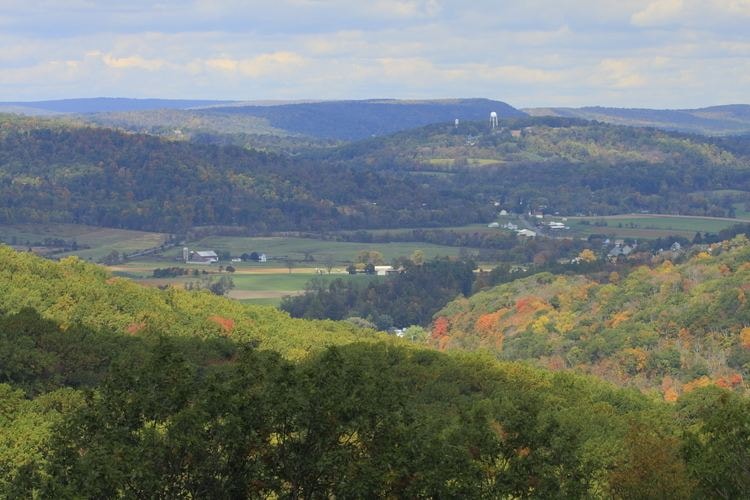
The Catoctin AVA sits in the foothills of the Blue Ridge in western Maryland, where the same mountain chain that runs through Virginia's wine country crosses the Potomac and continues north through Frederick County. It is a small, quiet appellation — fewer than a dozen wineries, no national profile to speak of — but it produces wines with a genuine sense of place, shaped by elevation, well-drained mountain soils, and a continental climate that rewards the varieties willing to work for it.
Catoctin AVA — Maryland's Mountain Wine Country
Maryland does not come up often in conversations about American wine. The state sits in the shadow of Virginia to the south, which has spent the past two decades building a national reputation for Viognier, Cabernet Franc, and Petit Verdot. Pennsylvania to the north has its own growing wine identity. And Maryland, tucked between them, tends to get overlooked.
That is a mistake — and the Catoctin AVA is the best argument for why.
Established in 1983, Catoctin is one of the oldest federally recognized wine appellations on the East Coast. It sits in the foothills of the Blue Ridge in Frederick County, in the western part of the state, where the same mountain chain that runs through Virginia's wine country crosses the Potomac River and continues northward. The elevation, the well-drained mountain soils, and the continental climate that comes with being in the Appalachian foothills create growing conditions that are genuinely distinct from the coastal plain and the Chesapeake Bay lowlands that most people associate with Maryland.
The wines produced here are not trying to be Virginia wines. They are not trying to be anything other than what they are — expressions of a particular piece of land, made by producers who have been farming it long enough to understand what it can do.
The Catoctin AVA covers a broad swath of western Maryland, centered on Frederick County and extending into portions of Carroll and Washington counties. The appellation takes its name from the Catoctin Mountains — a ridge of the Blue Ridge system that runs northeast through the region, giving the area its characteristic topography of forested ridges, open valleys, and the rolling farmland that has made Frederick County one of Maryland's most productive agricultural regions for centuries.
Frederick itself is one of Maryland's most historic cities, founded in 1745 and serving as a crossroads between the coastal settlements to the east and the frontier to the west. The surrounding countryside retains much of its agricultural character — a patchwork of farms, orchards, and now vineyards that have been steadily expanding since the 1970s.
The Catoctin Mountains are not dramatic by western standards — they top out around 1,800 feet — but they are significant enough to shape the local climate in meaningful ways. The ridges channel cold air drainage away from the valley floors, reducing frost risk in the critical spring and fall periods. The slopes provide the elevation and aspect that the best vineyard sites require. And the forests that cover the higher ground moderate temperatures and humidity in ways that benefit the vines below.
The Catoctin AVA has a continental climate — four distinct seasons, cold winters, warm summers, and a fall that can be either glorious or challenging depending on the year. It is warmer and drier than the coastal plain to the east, with less humidity and a lower risk of the fungal diseases that plague vineyards in more maritime climates. The Blue Ridge foothills act as a partial barrier to moisture coming off the Atlantic, creating a rain shadow effect that reduces precipitation during the growing season.
The soils are the product of the underlying geology — a mix of schist, quartzite, and metabasalt that weathers into well-drained, mineral-rich loams and clay-loams. These soils drain quickly, forcing vine roots deep in search of water and nutrients. They warm up fast in spring, giving vines an early start, and they retain enough moisture through the summer to keep the vines from shutting down during dry spells. The mineral content of the parent rock — particularly the iron-rich metabasalt in some parts of the appellation — contributes a distinctive character to the wines grown on those sites.
Elevation varies considerably across the appellation, from around 400 feet in the valley floors to over 1,000 feet on the higher slopes. The best vineyard sites tend to sit in the 600 to 900 foot range — high enough to benefit from cold air drainage and the moderating influence of elevation, but low enough to accumulate the heat units needed to ripen the varieties grown here.
Cabernet Franc is the Catoctin AVA's most compelling variety and the one that best expresses the region's character. The grape is ideally suited to the continental climate — it ripens earlier than Cabernet Sauvignon, making it a reliable choice in years when fall arrives quickly, and it produces wines with the herbal, violet, and red-cherry character that the variety shows in cool climates. Catoctin Cab Franc tends toward elegance rather than power, with a freshness and aromatic lift that makes it one of the most food-friendly red wines produced in the mid-Atlantic. The best examples have a precision and restraint that rewards attention.
Chardonnay is the region's most important white variety and, in the hands of the best producers, its most versatile. The continental climate produces Chardonnay with genuine acidity and structure — less tropical and more mineral than California examples, with a freshness that keeps the wine alive at the table. Styles vary by producer, from lean and unoaked to richer, barrel-fermented expressions, but the best examples share a clarity and focus that reflects the mountain terroir.
Chambourcin is a French-American hybrid that has become one of the most important red varieties in the mid-Atlantic, and the Catoctin AVA is one of the best places in the region to find serious examples. The variety is well-suited to the continental climate — it is cold-hardy, disease-resistant, and produces wines with a distinctive dark-fruit character, firm tannins, and enough acidity to age. In the right hands, Chambourcin produces wines that challenge the assumption that hybrid varieties can't make serious wine. The best Catoctin examples are deeply colored, structured, and genuinely interesting.
Vidal Blanc is a white hybrid that performs consistently well in the region's climate, producing wines that range from dry and crisp to lusciously sweet in late harvest and ice wine styles. The variety's high natural acidity and tropical-fruit character make it one of the most versatile whites in the appellation, and several producers make excellent examples across the style spectrum.
Merlot appears in the warmer, more protected sites and better vintages, producing wines that are softer and more approachable than their California counterparts, with the freshness that the continental climate provides. It is not the region's focus, but in the right hands it produces wines with genuine character and the kind of food-friendliness that makes them easy to recommend.
Petit Verdot has found a surprising home in the mid-Atlantic, and the Catoctin AVA is no exception. The variety ripens late and demands warmth, but in good years it produces wines with an extraordinary depth of color, firm tannins, and a distinctive violet and dark-fruit character that adds complexity to blends and stands on its own as a varietal wine. Several Catoctin producers are making Petit Verdot that rivals the best examples from Virginia.
Viognier is grown by a handful of producers in the warmer, more sheltered sites, producing wines with the variety's characteristic peach, apricot, and floral aromatics. The continental climate preserves the acidity that Viognier can lose in warmer regions, and the best examples have a balance and freshness that makes them genuinely compelling.
Seyval Blanc is a white hybrid that has been grown in the region since the earliest days of the modern Maryland wine industry. The variety produces wines with a clean, crisp character — citrus, green apple, and a mineral quality that reflects the mountain soils — and it is one of the most reliable white varieties in the appellation's cooler sites.
The Catoctin AVA has fewer than a dozen wineries operating within or immediately adjacent to the appellation, but the range of styles and approaches is broader than the number might suggest. These are producers who have been farming this land for decades in some cases, and the depth of experience shows in the wines.
Linganore Winecellars in Mount Airy is the largest and most established winery in the Catoctin AVA, founded in 1972 by the Aellen family and still family-owned and operated more than 50 years later. The winery produces a broad range of wines from estate and locally sourced fruit, with a particular strength in fruit wines and semi-sweet styles that have made it one of the most visited wineries in Maryland. But the serious wine drinker should look past the approachable entry-level wines to the estate vinifera and hybrid bottlings, which show what the region can do when pushed. The winery's long history gives it a perspective on the land that newer producers can't replicate.
Elk Run Vineyards in Mount Airy is one of the Catoctin AVA's most serious producers and one of the most important wineries in Maryland's modern wine history. Founded in 1983 by Neil Bassford, the winery has been making estate wines from vinifera varieties for over four decades, with a focus on Chardonnay, Cabernet Franc, and Riesling. Their dry Chardonnay is a benchmark for the state — lean, mineral, and built to age — and the Cabernet Franc shows the variety's potential in the mid-Atlantic with a precision and elegance that is genuinely impressive. Elk Run is the winery that serious wine drinkers should visit first.
Loew Vineyards in Mount Airy is a small family estate that has been producing wines from estate-grown vinifera and hybrid varieties since 1986. The winery focuses on Chardonnay, Chambourcin, and Seyval Blanc, made with minimal intervention and a clear sense of place. Production is limited and the wines are sold primarily at the winery and through a small mailing list — worth seeking out specifically.
Catoctin Breeze Vineyard in Thurmont sits at the foot of the Catoctin Mountains, with views toward the ridge that gives the appellation its name. The winery produces wines from estate-grown vinifera varieties with a focus on Cabernet Franc, Merlot, and Chardonnay. The mountain setting and the proximity to Catoctin Mountain Park — the federal park that includes Camp David — give the winery a distinctive sense of place that few others in the region can match.
Crow Vineyard & Winery in Kennedyville, on the Eastern Shore, is technically outside the Catoctin AVA but is worth including in any survey of Maryland wine. The winery produces wines from estate-grown vinifera varieties with a focus on Bordeaux-style reds and white Burgundy-inspired Chardonnay, and the quality is consistently among the highest in the state.
Old Westminster Winery in Westminster, just east of the Catoctin AVA, has become one of Maryland's most talked-about producers since its founding in 2012. Siblings Drew, Lisa, and Ashli Baker make wines with a focus on minimal intervention and site expression, and the results — particularly the Pét-Nat sparkling wines and the skin-contact whites — have attracted national attention. The winery is not strictly within the Catoctin AVA, but it is part of the same western Maryland wine culture and worth including in any serious exploration of the region.
Visiting the Catoctin AVA is a different experience from the more polished wine tourism destinations of Virginia or Napa. There is no established wine trail with a glossy map, no concentration of tasting rooms within walking distance of each other. What there is instead is a genuinely beautiful agricultural landscape — the rolling farmland of Frederick County, the forested ridges of the Catoctin Mountains, and the particular quality of light that comes with being in the Appalachian foothills — and a handful of producers who are making wine because they love the land and believe in what it can produce.
Frederick is the natural base for any visit to the Catoctin wine country. The city is one of Maryland's most charming historic destinations, with a well-preserved downtown of 18th and 19th century architecture, excellent restaurants, and a lively arts scene. The city sits at the intersection of several major routes — I-70, US-15, and US-340 — making it easily accessible from Baltimore (45 minutes east), Washington DC (an hour south), and the Virginia wine country across the Potomac.
Catoctin Mountain Park and the adjacent Cunningham Falls State Park offer hiking, waterfalls, and some of the most beautiful fall foliage in the mid-Atlantic. The combination of wine touring and outdoor recreation makes the region a natural long-weekend destination for visitors from the Baltimore-Washington corridor.
Fall is the ideal time to visit. The harvest typically runs from late September through October, and the combination of ripening grapes, turning leaves on the Catoctin ridges, and the cool, clear days of a mid-Atlantic autumn makes the region as visually compelling as anywhere in the East. Several wineries host harvest events and offer the chance to taste wines still in barrel.
The region is also accessible from Washington DC in a way that makes it a realistic day trip for the millions of people who live in the metro area. The drive up US-15 from the Beltway takes about an hour, passing through some of the most historically significant countryside in America — the Civil War battlefields of Antietam and Monocacy are both within easy reach of the wine trail.
Maryland's wine industry has been growing steadily for decades, but it has never quite broken through to national recognition in the way that Virginia has. The reasons are partly historical — Virginia had a head start and invested more aggressively in wine tourism infrastructure — and partly a matter of scale. Maryland simply has fewer wineries and less planted acreage than its southern neighbor.
But the quality is there. The Catoctin AVA, in particular, has been producing wines of genuine distinction for over 40 years, and the best producers — Elk Run, Loew, Old Westminster — are making wines that deserve a place in any serious conversation about mid-Atlantic wine.
What the region needs is more attention from wine drinkers willing to look past the familiar names and explore what is being made in the Blue Ridge foothills of western Maryland. The wines reward that exploration. The landscape rewards it even more.
The Catoctin AVA is centered on Frederick County in western Maryland, approximately 45 miles northwest of Baltimore and one hour north of Washington DC via US-15. Frederick is the best base for a visit, with excellent hotels, restaurants, and easy access to the surrounding wine country and historic sites.
Explore Topics
Written by
Chuck Hoeffler
Chuck Hoeffler is the founder and editor of The American Vine. He loves tasting and writing about American wine, with a particular focus on regions and wineries that deserve more attention than they typically receive.


