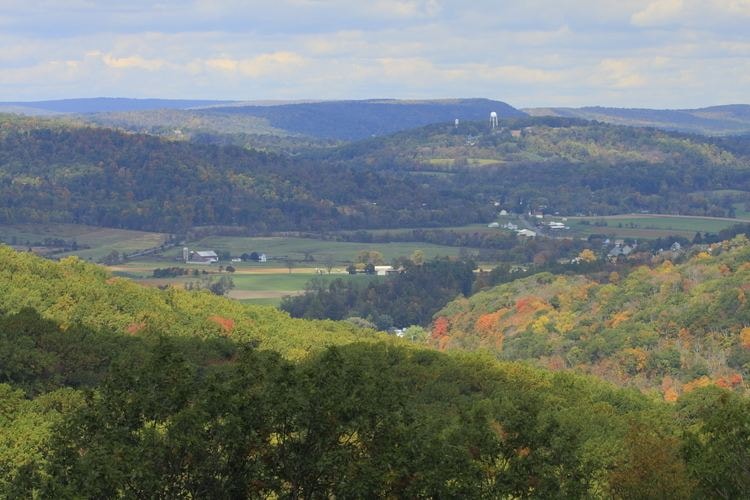
Cumberland Valley AVA — Maryland's Western Frontier Wine Country
The Cumberland Valley AVA stretches across the Appalachian ridge-and-valley landscape of western Maryland and south-central Pennsylvania, but it is the Maryland portion — tucked into Washington and Allegany counties between the Blue Ridge and Allegheny Front — that tells the most compelling story. This is wine country at the edge of what is possible in the mid-Atlantic: high elevation, short growing seasons, and a continental climate that demands cold-hardy varieties and rewards producers willing to work with the land rather than against it.

Cumberland Valley AVA — Maryland's Western Frontier Wine Country
Drive west from Frederick on I-70 and the landscape changes in a way that feels almost cinematic. The rolling Piedmont farmland of central Maryland gives way to the Blue Ridge, then to the Great Valley, then to the successive ridges of the Appalachian Mountains — South Mountain, Elk Ridge, Catoctin Mountain, Sideling Hill — each one rising and falling as the highway cuts through water gaps and climbs toward the Allegheny Plateau. By the time you reach Hagerstown, you are in a different Maryland entirely. By the time you reach Cumberland, you are in a place that most people from the Baltimore-Washington corridor have never seen.
This is the Maryland portion of the Cumberland Valley AVA — and it is, quietly, one of the most interesting and least-known wine regions in the mid-Atlantic.
The Cumberland Valley AVA is a large appellation, covering a broad swath of the Appalachian ridge-and-valley landscape across both Maryland and Pennsylvania. But this guide focuses exclusively on the Maryland side — Washington and Allegany counties, the westernmost reaches of the state, where the valley floor sits at elevations of 500 to 700 feet and the surrounding ridges climb to over 2,000 feet. This is wine country at the edge of what is possible in the mid-Atlantic: a continental climate with cold winters, warm summers, and a growing season that is shorter and more demanding than anywhere else in Maryland.
The producers who have chosen to make wine here did not do so because it was easy. They did so because the land is beautiful, the challenge is real, and the wines that emerge from that challenge carry a character that is entirely their own.
The Cumberland Valley runs northeast to southwest through western Maryland, following the Great Valley — the same geological trough that runs from Alabama to New York, known by different names in different states. In Maryland, it is bounded to the east by South Mountain, a northern extension of the Blue Ridge, and to the west by Sideling Hill and the successive ridges of the Allegheny Front. The valley floor is broad and fertile, drained by Antietam Creek and its tributaries in Washington County and by the Potomac River and Wills Creek in Allegany County.
Hagerstown, the Washington County seat, is the largest city in western Maryland and the commercial center of the region. It sits at the northern end of the Antietam Valley, surrounded by farmland that has been producing grain, fruit, and livestock for centuries. The city is best known to most Americans as the site of the Battle of Antietam — the bloodiest single day in American military history, fought just south of town in September 1862 — but it is also the gateway to a wine country that most visitors overlook entirely.
Cumberland, the Allegany County seat, sits at the confluence of Wills Creek and the North Branch of the Potomac, hemmed in by mountains on all sides. It was once one of the most important cities in America — the western terminus of the C&O Canal, the eastern terminus of the National Road, and a major railroad hub — and the grandeur of its Victorian architecture reflects that former importance. Today it is a smaller, quieter city, but the surrounding mountains and valleys have a beauty that is genuinely spectacular, and the wine producers who have established themselves in the region are part of a broader effort to build a new identity for western Maryland.
The Maryland portion of the Cumberland Valley has a continental climate that is more extreme than anywhere else in the state. The valley floor is sheltered from the worst of the winter cold by the surrounding ridges, but temperatures still drop well below freezing on a regular basis, and the growing season — from last frost to first frost — is shorter than in the Catoctin or Linganore AVAs to the east. The summers are warm and relatively dry, with less of the humidity that challenges vinifera varieties in the more maritime climates of the Chesapeake Bay watershed.
The rain shadow effect of the surrounding ridges is significant. South Mountain to the east and the Allegheny Front to the west both intercept moisture moving in from the Atlantic and the Great Lakes, creating a valley climate that is drier than either the Piedmont to the east or the Allegheny Plateau to the west. That dryness reduces the fungal disease pressure that is the great enemy of vinifera viticulture in the mid-Atlantic, and it is one of the reasons that the valley is capable of producing vinifera wines of genuine quality in good years.
The soils are the product of the underlying limestone and shale geology of the Great Valley — a mix of well-drained limestone-derived loams and clay-loams that are among the most fertile agricultural soils in the Appalachian region. Limestone soils are prized in wine regions around the world for the mineral character they contribute to wines, and the Cumberland Valley's limestone base gives the best wines from the region a distinctive chalky, mineral quality that sets them apart from the schist and gneiss-derived wines of the Catoctin and Linganore.
The best vineyard sites in the Maryland portion of the valley sit on the slopes above the valley floor — south and southwest-facing hillsides that capture maximum sunlight, drain cold air away from the vines, and benefit from the thermal mass of the surrounding ridges. Elevation at these sites typically ranges from 600 to 1,000 feet, high enough to moderate summer temperatures and extend the growing season through the critical ripening period in September and October.
Chambourcin is the most reliable and widely planted red variety in the Maryland portion of the Cumberland Valley, and for good reason. The French-American hybrid is cold-hardy enough to survive the valley's harsh winters without significant vine damage, disease-resistant enough to thrive in the occasional humid summer, and productive enough to give growers the consistent yields that make farming economically viable. But cold hardiness and disease resistance alone do not make a great wine grape — what makes Chambourcin compelling in the Cumberland Valley is that the combination of limestone soils and continental climate produces wines with a depth, structure, and mineral character that is genuinely distinctive. The best examples are deeply colored, firmly tannic, and built to age, with a dark-fruit and earthy character that reflects the valley's agricultural heritage.
Vidal Blanc is the most important white variety in the region and one of the most versatile grapes grown in the Maryland portion of the valley. The French-American hybrid produces wines across the full style spectrum — from bone-dry and crisp to lusciously sweet in late harvest and ice wine styles — and the continental climate of the Cumberland Valley is particularly well-suited to the late-harvest styles. The cold autumns and the risk of early frost create natural conditions for botrytis and freeze concentration, and several producers are making late-harvest Vidal Blanc wines with a richness and complexity that rivals the finest examples from the Finger Lakes. The dry and off-dry styles are equally compelling, with a tropical-fruit and citrus character that is immediately appealing and a freshness that makes them excellent companions to the region's agricultural cuisine.
Cabernet Franc is the most ambitious vinifera variety grown in the Maryland portion of the valley, and in good years it produces wines that justify the ambition. The grape's early ripening relative to Cabernet Sauvignon makes it a more reliable choice in the valley's shorter growing season, and the limestone soils contribute a mineral precision to the wines that is genuinely distinctive. The best examples have the herbal, violet, and red-cherry character that the variety shows in cool climates, with a freshness and structure that makes them among the most food-friendly red wines produced in Maryland. In difficult years, the variety can be herbaceous and thin — the continental climate is unforgiving — but the best vintages produce wines that are worth seeking out specifically.
Chardonnay appears in the warmer, more protected sites and better vintages, producing wines with a genuine acidity and mineral character that reflects the limestone soils. The variety is at the edge of what the valley's climate can reliably ripen, and the results are variable, but the best examples have a lean, focused quality that is more Chablis than California — wines built for the table rather than the trophy shelf.
Seyval Blanc is a white hybrid that performs consistently well in the valley's continental climate, producing wines with a clean, crisp character — citrus, green apple, and a mineral quality that reflects the limestone soils — and the high natural acidity that the cool climate provides. It is one of the most reliable white varieties in the region and an excellent food wine in the hands of producers who take it seriously.
Marquette has begun appearing in the vineyards of the most forward-thinking producers in the region, and the results are promising. The cold-hardy red hybrid developed at the University of Minnesota is well-suited to the valley's harsh winters, and the limestone soils and continental climate produce wines with a depth and structure that the variety rarely shows in warmer regions. It is early days for Marquette in the Cumberland Valley, but the potential is real.
Traminette, the Gewürztraminer hybrid, finds a natural home in the valley's cool continental climate, producing wines with the variety's characteristic lychee, rose petal, and spice aromatics combined with the high natural acidity that the cool conditions provide. Several producers are making excellent examples that are among the most distinctive white wines in the region.
The Maryland portion of the Cumberland Valley has a small number of wineries — fewer than in the Catoctin or Linganore AVAs to the east — but the producers who are working here bring a seriousness and commitment to the land that is evident in the wines.
Cider Farm Winery in Hagerstown is one of the most established producers in the Washington County portion of the valley, with a focus on estate-grown hybrid and vinifera varieties that reflect the region's agricultural character. The winery produces wines from Chambourcin, Vidal Blanc, and Seyval Blanc that are honest expressions of the valley's limestone terroir, made with a directness and lack of pretension that suits the region's character. The tasting room draws visitors from the Hagerstown area and from travelers passing through on I-70, and the wines are an excellent introduction to what the Maryland portion of the valley can produce.
Crow Vineyard & Winery, while based on Maryland's Eastern Shore, sources fruit from the western Maryland region and has been an important voice in building awareness of the state's diverse wine regions. Their engagement with the Cumberland Valley's limestone terroir has produced wines that demonstrate the region's potential to a wider audience.
Big Cork Vineyards in Rohrersville, in Washington County at the foot of South Mountain, sits at the eastern edge of the Cumberland Valley AVA and represents one of the most ambitious winemaking operations in western Maryland. The winery produces wines from estate-grown vinifera and hybrid varieties with a focus on quality and site expression, and the results — particularly the Cabernet Franc and Chardonnay — have attracted attention from wine drinkers who know the mid-Atlantic region well. The winery's setting, with views toward South Mountain and the Antietam Valley below, is one of the most scenic in Maryland wine country, and the tasting room experience reflects the ambition of the operation.
Harford Vineyard & Winery brings additional production to the region, with a range of wines from both estate and locally sourced fruit that covers the full spectrum from approachable semi-sweet styles to more serious vinifera bottlings. The winery is a reliable stop on any tour of western Maryland wine country and a good place to get a comprehensive picture of what the region produces.
The Maryland portion of the Cumberland Valley is not a polished wine tourism destination. There is no established wine trail with a glossy map, no concentration of tasting rooms within easy walking distance of each other, no wine tourism infrastructure comparable to what exists in the Catoctin or Linganore AVAs to the east. What there is instead is a genuinely beautiful and historically rich landscape — one of the most compelling in the mid-Atlantic — and a handful of producers making wines that are worth the drive.
Hagerstown is the natural base for a visit to the Washington County portion of the valley. The city has a well-preserved downtown with good restaurants, a strong arts scene anchored by the Washington County Museum of Fine Arts, and easy access to some of the most historically significant sites in America. Antietam National Battlefield, just south of town, is one of the most moving and beautifully preserved Civil War sites in the country — a visit there, combined with a stop at one of the valley's wineries, makes for a day that is both historically rich and genuinely pleasurable.
The C&O Canal National Historical Park runs along the Potomac River from Washington DC to Cumberland, passing through the heart of the Maryland portion of the valley. The towpath — 184.5 miles of flat, unpaved trail — is one of the great recreational resources of the mid-Atlantic, and the combination of cycling or hiking the towpath with wine touring in the valley is one of the most distinctive experiences the region offers.
Cumberland is worth the extra hour's drive west for visitors who want to see the full extent of western Maryland's character. The city's Victorian architecture, its mountain setting, and the extraordinary landscape of Allegany County — including the Narrows, a dramatic water gap where Wills Creek cuts through Haystack Mountain — make it one of the most visually compelling destinations in the state. The Western Maryland Scenic Railroad runs excursion trains through the mountains between Cumberland and Frostburg, offering a perspective on the landscape that is impossible to get any other way.
Fall is the ideal time to visit. The hardwood forests of the Appalachian ridges — oak, maple, hickory, and beech — turn spectacular colors in late September and early October, and the combination of autumn foliage, harvest activity at the wineries, and the particular quality of light that comes with being in the mountain valleys makes the region as visually compelling as anywhere in the East. The crowds that fill the Antietam battlefield and the C&O Canal in summer have thinned, the pace is slower, and the wines are at their most interesting.
The Maryland portion of the Cumberland Valley is frontier wine country in the most literal sense — a region where the challenge of the environment is part of the story, where the producers who have chosen to work here did so with full knowledge of the difficulties involved, and where the wines that emerge from that challenge carry a character that is impossible to replicate in easier climates.
That character is not for everyone. The wines are leaner, more austere, and more demanding than the approachable styles that dominate the Linganore AVA to the east. The growing season is shorter, the winters are harsher, and the vintage variation is more pronounced. In difficult years, the wines can be thin and herbaceous. In good years, they can be extraordinary — wines with a mineral precision, a structural integrity, and a genuine sense of place that rewards the attention of serious wine drinkers.
The region is also a reminder that Maryland wine is more diverse and more interesting than its reputation suggests. From the mountain terroir of the Cumberland Valley to the Piedmont character of the Linganore to the Blue Ridge foothills of the Catoctin, the state offers a range of wine experiences that is genuinely compelling — and the western frontier is the most distinctive of all.
The Maryland portion of the Cumberland Valley AVA covers Washington and Allegany counties in western Maryland. Hagerstown is the best base for a visit, approximately 75 miles west of Baltimore via I-70. Antietam National Battlefield and the C&O Canal National Historical Park are both within easy reach and make natural companions to a wine touring day in the valley.
Explore Topics
Written by
Chuck Hoeffler
Chuck Hoeffler is the founder and editor of The American Vine. He loves tasting and writing about American wine, with a particular focus on regions and wineries that deserve more attention than they typically receive.