Linganore AVA — Maryland's Piedmont Wine Country
The Linganore AVA sits in the rolling Piedmont of central Maryland, east of Frederick and west of the suburban sprawl of the Baltimore-Washington corridor. It is warmer and lower than the Catoctin AVA to its west, with a gentler topography and a climate that opens the door to a broader range of varieties. It is also, quietly, home to some of the most interesting and diverse winemaking in the state — a region where hybrid varieties are taken seriously, where fruit wines have built a loyal following, and where a new generation of producers is pushing the boundaries of what Maryland wine can be.

Linganore AVA — Maryland's Piedmont Wine Country
There is a version of Maryland wine that most people know — or think they know. It is the version that involves fruit wines, semi-sweet blends, and tasting rooms that cater to the weekend crowd from Baltimore and Washington. It is approachable, unpretentious, and commercially successful. And it has, for a long time, been the dominant image of Maryland wine in the minds of people who have not looked closely.
The Linganore AVA is largely responsible for that image. It is also, in the hands of its best producers, doing a great deal to complicate and deepen it.
Established in 1983 — the same year as the Catoctin AVA to its west — Linganore is Maryland's other founding appellation, and in many ways its most representative one. It sits in the rolling Piedmont of central Maryland, in Carroll and Frederick counties, east of the Blue Ridge foothills and west of the suburban edge of the Baltimore-Washington corridor. The landscape is gentler here than in the Catoctin — lower elevation, softer hills, broader valleys — and the climate is warmer and more forgiving. That combination has made Linganore the most productive and most visited wine region in the state, home to more wineries and more visitors than any other Maryland appellation.
But productivity and popularity are not the whole story. Beneath the approachable surface of the Linganore wine trail is a region with genuine depth — producers who are making serious wines from both vinifera and hybrid varieties, experimenting with styles that have no precedent in Maryland, and building a case for the Piedmont as a place where wine can be both commercially successful and genuinely interesting.
The Linganore AVA covers a broad swath of central Maryland, centered on the Linganore Creek watershed in Carroll and Frederick counties. The appellation takes its name from Linganore Creek, a tributary of the Monocacy River that drains the rolling Piedmont between the Blue Ridge foothills to the west and the fall line to the east.
The town of Mount Airy, straddling the Carroll-Frederick county line, is the informal center of the appellation and home to several of its most established wineries. New Windsor, Woodbine, and Eldersburg are other towns within or adjacent to the AVA, each with its own cluster of producers. The region is close enough to Baltimore and Washington — roughly 45 minutes to an hour from either city — to draw a steady stream of weekend visitors, and the wine trail infrastructure reflects that proximity.
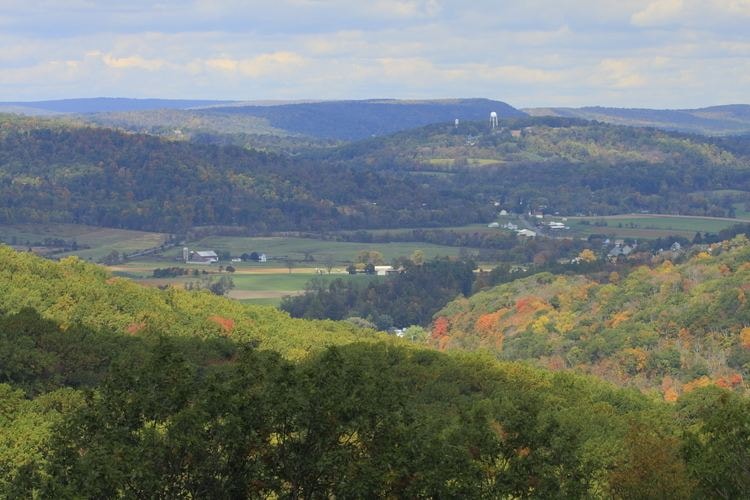
The Piedmont landscape here is quintessentially mid-Atlantic — rolling hills covered in a mix of farmland, woodlots, and the kind of pastoral countryside that has been feeding the Chesapeake Bay watershed for centuries. The Linganore Creek and its tributaries cut through the landscape in gentle valleys, and the vineyards tend to sit on the slopes above the valley floors, where drainage is better and frost risk is lower.
The Linganore AVA has a humid continental climate — four distinct seasons, cold winters, warm and sometimes humid summers, and a fall that can be either long and gentle or abruptly short depending on the year. It is warmer than the Catoctin AVA to its west, with lower elevation and less of the moderating influence of the Blue Ridge. The summers bring heat and humidity that can challenge vinifera varieties, particularly those susceptible to fungal diseases, and the best producers have adapted their viticulture accordingly — choosing disease-resistant varieties, managing canopies carefully, and farming sites with good air circulation and drainage.
The soils are the product of the underlying Piedmont geology — a mix of schist, gneiss, and granite that weathers into well-drained, mineral-rich loams and clay-loams. These soils are similar in character to those of the Catoctin AVA, though generally less rocky and more easily farmed. The mineral content of the parent rock contributes a distinctive character to the wines grown on the better sites, and the well-drained nature of the soils helps manage the excess moisture that the humid climate can bring.
Elevation in the Linganore AVA ranges from around 300 feet in the valley floors to about 800 feet on the higher ridges. The best vineyard sites sit in the 400 to 700 foot range — high enough to benefit from cold air drainage and good air circulation, but low enough to accumulate the heat units needed to ripen the varieties grown here.
Chambourcin is the Linganore AVA's most important red variety and, in the hands of the best producers, its most compelling contribution to Maryland wine. The French-American hybrid is perfectly suited to the region's humid continental climate — it is cold-hardy, disease-resistant, and produces wines with a distinctive dark-fruit character, firm tannins, and enough acidity to age. In the Linganore's warmer conditions, Chambourcin ripens fully and consistently, developing a depth and structure that challenges the assumption that hybrid varieties can't make serious wine. The best examples are deeply colored, structured, and genuinely interesting — wines that reward attention and improve with a few years in the bottle.
Vidal Blanc is the region's most versatile white variety and one of the most important grapes in the Maryland wine industry. The French-American hybrid produces wines that range from bone dry to lusciously sweet, with a distinctive tropical-fruit and citrus character that is immediately appealing. The dry and off-dry styles are the most food-friendly, with a freshness and acidity that makes them excellent companions to the Chesapeake Bay seafood that is the region's culinary signature. The late harvest and ice wine-style dessert wines are among the most distinctive produced in Maryland, with a concentration and complexity that rivals the finest examples from the Finger Lakes.
Cabernet Franc is the Linganore's most serious vinifera red variety, and the producers who have committed to it are making wines that deserve attention well beyond Maryland. The grape is well-suited to the continental climate — it ripens earlier than Cabernet Sauvignon, making it a reliable choice even in shorter seasons — and it produces wines with the herbal, violet, and red-cherry character that the variety shows in cool climates. Linganore Cab Franc tends toward a riper, more generous style than the leaner examples from the Catoctin AVA, reflecting the warmer conditions of the Piedmont.
Chardonnay is grown throughout the appellation, with styles ranging from lean and unoaked to richer, barrel-fermented expressions. The best examples have a genuine acidity and structure that reflects the continental climate, and several producers are making Chardonnay that competes comfortably with mid-range examples from the Finger Lakes and Virginia. The variety benefits from the Linganore's longer growing season relative to the Catoctin, developing more generous fruit character without losing the freshness that keeps it interesting.
Merlot appears in the warmer, more protected sites and better vintages, producing wines that are softer and more approachable than their California counterparts. It is not the region's focus, but in the right hands it produces wines with genuine character — round, food-friendly, and built for the table rather than the trophy shelf.
Cabernet Sauvignon is grown by a handful of producers in the warmest sites, and in good years it produces wines with genuine depth and structure. The variety is at the edge of what the Linganore's climate can reliably ripen, and the results are variable — outstanding in warm years, thin and herbaceous in cool ones. The best producers blend it with Merlot and Cab Franc to add complexity and manage the vintage variation.
Seyval Blanc is a white hybrid that has been grown in the region since the earliest days of the modern Maryland wine industry. The variety produces wines with a clean, crisp character — citrus, green apple, and a mineral quality that reflects the Piedmont soils — and it is one of the most reliable white varieties in the appellation's cooler sites. Several producers make excellent dry Seyval that is an underrated food wine.
Traminette is a Gewürztraminer hybrid that has found a natural home in the Linganore's climate. The variety offers the aromatic intensity of its parent — lychee, rose petal, ginger, spice — with better cold hardiness and disease resistance. The best examples have a richness and texture that makes them genuinely versatile at the table, and they are among the most distinctive white wines produced in the region.
Niagara and other native American varieties appear in the fruit wine and sweet wine programs of several producers, contributing the distinctive foxy, grapey character that is the hallmark of native American grapes. These wines are not for everyone, but they have a loyal following among visitors who grew up with them, and they are an honest expression of the region's agricultural heritage.
The Linganore AVA has more wineries than any other Maryland appellation, with a concentration of producers in the Mount Airy area and a broader scatter across Carroll and Frederick counties. The range of styles and approaches is wider here than anywhere else in Maryland wine country.
Linganore Winecellars in Mount Airy is the anchor of the appellation and one of the most visited wineries in Maryland. Founded in 1972 by the Aellen family and still family-owned and operated more than 50 years later, Linganore is the winery that introduced most Marylanders to the idea that wine could be made in their state. The winery produces a broad range of wines — fruit wines, semi-sweet blends, vinifera varietals, and hybrid wines — from estate and locally sourced fruit, and the tasting room draws tens of thousands of visitors each year. The serious wine drinker should look past the approachable entry-level wines to the estate vinifera bottlings, which show what the region can do when pushed. The winery's long history and deep roots in the community give it a perspective on the land that newer producers can't replicate.
Elk Run Vineyards in Mount Airy is the Linganore AVA's most serious producer and one of the most important wineries in Maryland's modern wine history. Founded in 1983 by Neil Bassford, Elk Run has been making estate wines from vinifera varieties for over four decades, with a focus on Chardonnay, Cabernet Franc, and Riesling. Their dry Chardonnay is a benchmark for the state — lean, mineral, and built to age — and the Cabernet Franc shows the variety's potential in the mid-Atlantic with a precision and elegance that is genuinely impressive. This is the winery that serious wine drinkers should visit first, and the one that has done the most to establish Maryland's credibility as a vinifera wine region.
Loew Vineyards in Mount Airy is a small family estate that has been producing wines from estate-grown vinifera and hybrid varieties since 1986. The winery focuses on Chardonnay, Chambourcin, and Seyval Blanc, made with minimal intervention and a clear sense of place. Production is limited and the wines are sold primarily at the winery — worth seeking out specifically for the Chambourcin, which is one of the finest examples of the variety produced in Maryland.
Serpent Ridge Vineyard in Westminster is one of the Linganore AVA's newer and more ambitious producers, with a focus on estate-grown vinifera varieties and a commitment to quality that has attracted attention from wine drinkers who know the region. Their Cabernet Franc and Chardonnay are consistently well-made, and the winery's hilltop setting — with views across the Carroll County countryside — is one of the most scenic in the appellation.
Boordy Vineyards in Hydes, just east of the Linganore AVA, is one of Maryland's oldest and most historically significant wineries, founded in 1945 by Philip Wagner — the man who introduced French-American hybrid varieties to the American wine industry and, in doing so, made modern East Coast winemaking possible. The winery has been through several ownership changes over the decades but continues to produce a broad range of wines from estate and locally sourced fruit. Their Chambourcin and Seyval Blanc are reliable and well-priced, and the winery's historical significance makes a visit feel like a genuine piece of American wine history.
Old Westminster Winery in Westminster has become one of Maryland's most talked-about producers since its founding in 2012. Siblings Drew, Lisa, and Ashli Baker make wines with a focus on minimal intervention and site expression — Pét-Nat sparkling wines, skin-contact whites, and low-intervention reds that have attracted national attention and a devoted following among natural wine enthusiasts. The winery is not strictly within the Linganore AVA, but it is part of the same central Maryland wine culture and represents the most exciting direction in the state's wine industry. Their Pét-Nat Vidal Blanc is one of the most distinctive wines produced in Maryland — fizzy, funky, and genuinely delicious.
Fiore Winery in Pylesville, in Harford County northeast of the Linganore AVA, is worth including in any survey of central Maryland wine. The winery produces a broad range of wines from estate-grown vinifera and hybrid varieties, with a particular strength in Italian-style reds and whites that reflect the family's heritage. Their Sangiovese and Nebbiolo are among the most unusual wines produced in Maryland, and the winery's commitment to Italian varieties in a mid-Atlantic climate is a fascinating experiment in terroir.
The Linganore AVA is the most accessible wine tourism destination in Maryland, and the most visited. The proximity to Baltimore and Washington — 45 minutes to an hour from either city — makes it a natural day trip or weekend destination for the millions of people who live in the metro corridor, and the wine trail infrastructure reflects that demand.
Mount Airy is the natural base for any visit to the Linganore wine country. The town sits at the intersection of I-70 and US-27, making it easily accessible from both Baltimore and Washington, and the surrounding countryside has a pastoral character that feels genuinely removed from the suburban sprawl to the east. The town itself is small and unpretentious, with a few good restaurants and the kind of unhurried pace that makes wine touring feel like a genuine escape.
Westminster, the Carroll County seat, is a larger and more developed base, with a well-preserved historic downtown, good restaurants, and easy access to the wineries in the northern part of the appellation. The town has a strong agricultural heritage — Carroll County is one of Maryland's most productive farming counties — and that heritage is visible in the landscape around the wineries.
The Linganore Wine Trail connects the appellation's member wineries with a self-guided touring map, and the distances between wineries are short enough that a long day can cover a meaningful stretch of the region. Several wineries host regular events — harvest festivals, music series, food pairings — that draw visitors throughout the year and give the region a lively, community-oriented character.
Fall is the ideal time to visit. The harvest typically runs from late September through October, and the combination of ripening grapes, turning leaves on the Piedmont hillsides, and the cool, clear days of a mid-Atlantic autumn makes the region as visually compelling as anywhere in the East. The Maryland Wine Festival in Westminster, held each September, is one of the largest wine events in the mid-Atlantic and a good opportunity to taste wines from across the state in one place.
The region is also a natural complement to a visit to the Catoctin AVA to the west. The two appellations are about 30 minutes apart by car, and a day that combines wineries from both regions gives a comprehensive picture of what Maryland wine country has to offer — the mountain character of the Catoctin alongside the warmer, more generous Piedmont style of the Linganore.
The Linganore AVA has sometimes been dismissed by serious wine drinkers as a region of fruit wines and semi-sweet crowd-pleasers. That dismissal is understandable — the region's most visible wines have not always been its most serious ones — but it is increasingly unfair.
The best producers in the Linganore are making wines that deserve attention on their own terms. Elk Run's Chardonnay and Cabernet Franc are as good as anything produced in the mid-Atlantic. Old Westminster's natural wines are among the most exciting produced anywhere on the East Coast. Loew's Chambourcin is a benchmark for the variety in Maryland. And the broader wine culture of the region — the commitment to hybrid varieties, the willingness to experiment, the deep roots in the agricultural landscape — gives the Linganore a character that is genuinely its own.
That character is worth discovering. And the best way to discover it is to drive out on a fall Saturday, find a winery you have never heard of, and let the wine tell you what the Piedmont can do.
The Linganore AVA is centered on Mount Airy and Westminster in Carroll and Frederick counties, approximately 45 minutes northwest of Baltimore and one hour north of Washington DC via I-70. The Maryland Wine Festival in Westminster is held each September and is one of the best opportunities to taste wines from across the state.
Explore Topics
Written by
Chuck Hoeffler
Chuck Hoeffler is the founder and editor of The American Vine. He loves tasting and writing about American wine, with a particular focus on regions and wineries that deserve more attention than they typically receive.