Texas Hill Country Wine — The Lone Star State's Surprising Wine Region
Texas is now the fifth-largest wine-producing state in America, and the Hill Country is leading the charge. Here is what makes this region worth your attention.

Texas Hill Country Wine — The Lone Star State's Surprising Wine Region
Most people don't think of Texas when they think of wine. They should.
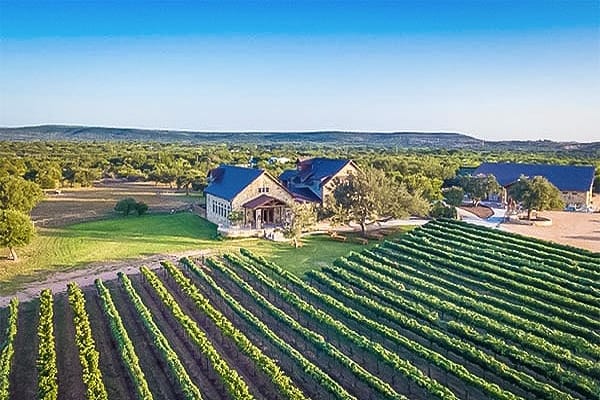
Texas is now the fifth-largest wine-producing state in America, with over 400 wineries and a wine industry that has grown more than tenfold in the past two decades. At the center of that growth is the Texas Hill Country — a vast, rugged stretch of limestone hills, cedar breaks, and live oak savanna west of Austin that has quietly become one of the most interesting wine regions in the country.
I'll be honest: I came to Texas wine as a skeptic. I left as a convert.
The Lay of the Land
The Texas Hill Country AVA is enormous — roughly 9 million acres, making it the second-largest wine appellation in the United States by area. Within it sit two smaller, more focused sub-AVAs: Fredericksburg in the Texas Hill Country and Bell Mountain, the first single-county AVA in Texas.
The region sits at elevations between 1,400 and 2,200 feet above sea level. That altitude matters enormously. It moderates what would otherwise be brutal summer heat, bringing cool nights that preserve acidity in the grapes. The diurnal temperature swings here — sometimes 40 degrees between afternoon highs and overnight lows — are comparable to what you find in the best parts of California's Central Coast.
The soils are predominantly limestone and granite, with thin topsoil over rocky subsoil. Vines have to work hard here. That stress, counterintuitively, tends to produce more concentrated, interesting fruit.
The Climate Challenge — and Opportunity
Texas winemaking is not for the faint of heart. The climate is genuinely difficult: hot summers, unpredictable spring frosts, periodic drought, and the ever-present threat of hail and severe storms. Pierce's Disease, a bacterial infection spread by the glassy-winged sharpshooter insect, has devastated vineyards across the state and forced growers to plant resistant rootstocks.
But difficulty breeds creativity. Texas winemakers have had to think carefully about which grapes actually thrive here rather than simply planting what sells. The result is a wine culture that is genuinely experimental and, increasingly, genuinely excellent.
The Grapes That Thrive
Tempranillo has emerged as the signature red grape of the Texas Hill Country. The Spanish variety — the backbone of Rioja — loves hot days and cool nights, handles limestone soils beautifully, and produces wines with deep color, firm tannins, and earthy complexity. Texas Tempranillo at its best is unlike anything made in Spain: it has its own character, shaped by the Hill Country's particular combination of heat, altitude, and limestone.
Viognier is the white grape that has found its most compelling American expression in Texas. The aromatic Rhône variety — known for its peach, apricot, and floral notes — thrives in the Hill Country's heat and produces wines of remarkable intensity and perfume. Some of the best American Viognier I have tasted came from vineyards outside Fredericksburg.
Mourvèdre, Grenache, and Roussanne — the Rhône varieties broadly — have also shown tremendous promise. The climate parallels the Southern Rhône in ways that make these grapes a natural fit. Several producers are now making serious Rhône-style blends that can stand alongside California's best.
Cabernet Sauvignon is widely planted and can be excellent, though it requires careful site selection and canopy management to avoid overripeness. The best examples come from higher-elevation sites with good air drainage.
Producers Worth Knowing
Becker Vineyards is the region's most established name — a family operation outside Stonewall that has been making wine since 1992. Their Iconoclast Cabernet Sauvignon is one of the best values in Texas wine, and their Reserve Tempranillo shows what the grape can do in the Hill Country.
William Chris Vineyards has become one of the most respected names in Texas wine, with a focus on estate-grown fruit and minimal intervention winemaking. Their Enchanté — a Mourvèdre-dominant blend — is the wine that convinced me Texas could make genuinely serious red wine.
Pedernales Cellars makes some of the most consistent wines in the state, with particular strength in Tempranillo and Viognier. Their GSM blend is a reliable benchmark for what the Hill Country does with Rhône varieties.
Duchman Family Winery has built its entire program around Italian varieties — Vermentino, Montepulciano, Dolcetto, Aglianico — with impressive results. It is a reminder that Texas winemakers are still figuring out which grapes belong here, and that the answer may be more surprising than anyone expected.
Kuhlman Cellars is a smaller operation that has earned a devoted following for its Roussanne and its Tempranillo-based blends. Worth seeking out if you visit the region.
The Fredericksburg Experience
Fredericksburg is the hub of Texas wine country — a charming German-settled town of about 12,000 people that has become one of the most visited wine destinations in the South. The main drag, Main Street, is lined with tasting rooms, restaurants, and wine shops. On a busy weekend, it can feel more like a festival than a wine region.
That accessibility is both a strength and a weakness. The Hill Country wine scene has a festive, welcoming energy that California wine country sometimes lacks. But it also means that some producers are more focused on the tasting room experience than on what's in the bottle.
The serious wine is there — you just have to look for it. The producers I've listed above are a good starting point. And if you can get out of Fredericksburg and into the actual vineyards, the landscape alone is worth the trip.
What to Expect in the Glass
Texas Hill Country wine has a character that is distinctly its own. The reds tend toward deep color, firm structure, and earthy, savory notes — less fruit-forward than California, more mineral and rustic. The whites, particularly Viognier and Roussanne, can be strikingly aromatic and rich.
The best wines here are not trying to be California wine or Spanish wine or French wine. They are Texas wine — shaped by a specific place, a specific climate, and a specific set of challenges that have forced winemakers to be creative and honest about what their land can actually produce.
That honesty is what makes Texas Hill Country wine worth paying attention to.
Getting There
The Hill Country is about an hour west of Austin and two hours north of San Antonio. Most of the major wineries are clustered around Fredericksburg, with a few outliers to the north and east. A long weekend is enough to hit the highlights; a full week would let you explore more deeply.
The best time to visit is spring (March through May) or fall (September through November), when temperatures are moderate and the landscape is at its most beautiful. Summer visits are possible but hot — plan accordingly.
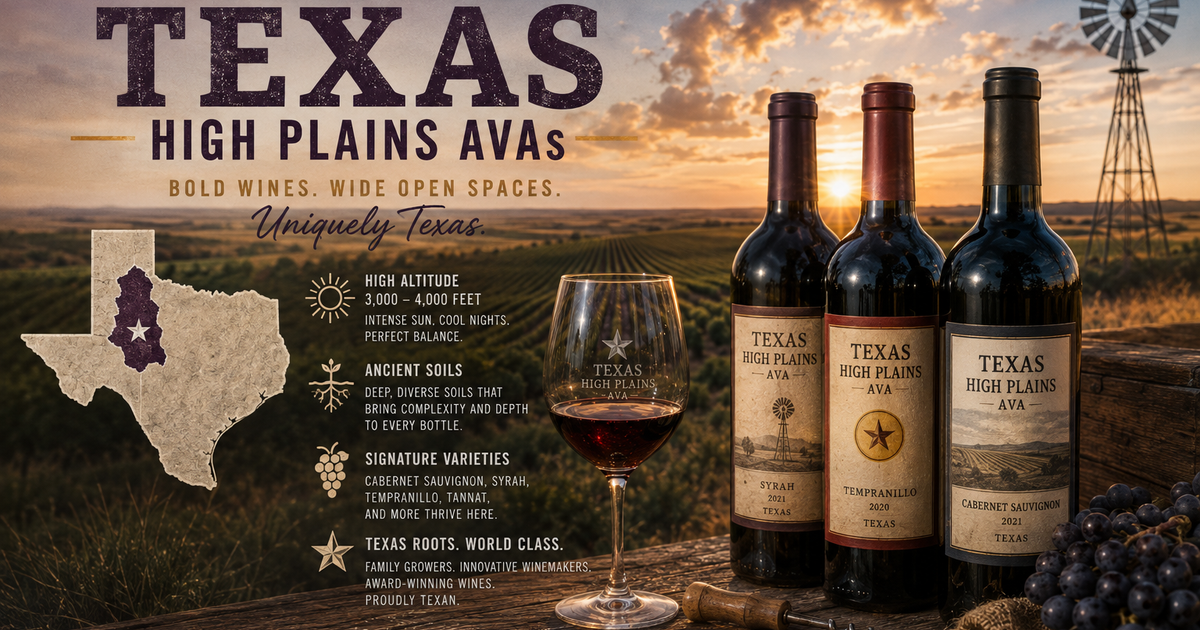
Texas wine is still finding itself. But the trajectory is unmistakably upward, and the wines being made in the Hill Country today are better than anything that came before them. That is a story worth following. For deeper dives, the Fredericksburg in the Texas Hill Country AVA guide covers the state's most concentrated wine district, and the Texas High Plains AVA guide explores the high-desert vineyards that supply much of the state's premium fruit.
Explore Topics
Written by
Chuck Hoeffler
Chuck Hoeffler is the founder and editor of The American Vine. He loves tasting and writing about American wine, with a particular focus on regions and wineries that deserve more attention than they typically receive.