Fredericksburg, Texas: The Heart and Soul of Texas Wine Country
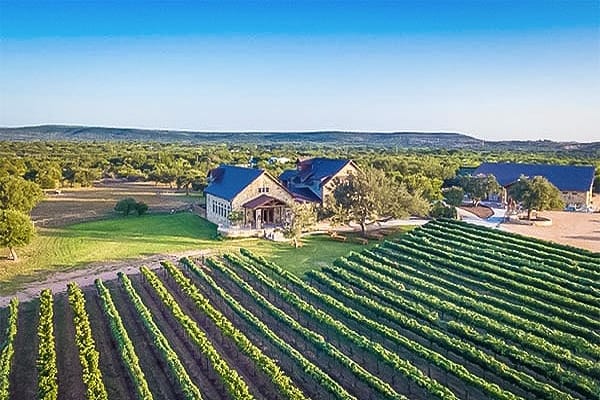
Nestled in the limestone hills of the Texas Hill Country, Fredericksburg is the undisputed capital of Texas wine tourism — a charming German-heritage town surrounded by more than 50 wineries, where Tempranillo, Viognier, and Mourvèdre thrive in thin soils and blazing sun, and where the Texas wine story is told most completely.
If you want to understand Texas wine, you start in Fredericksburg.
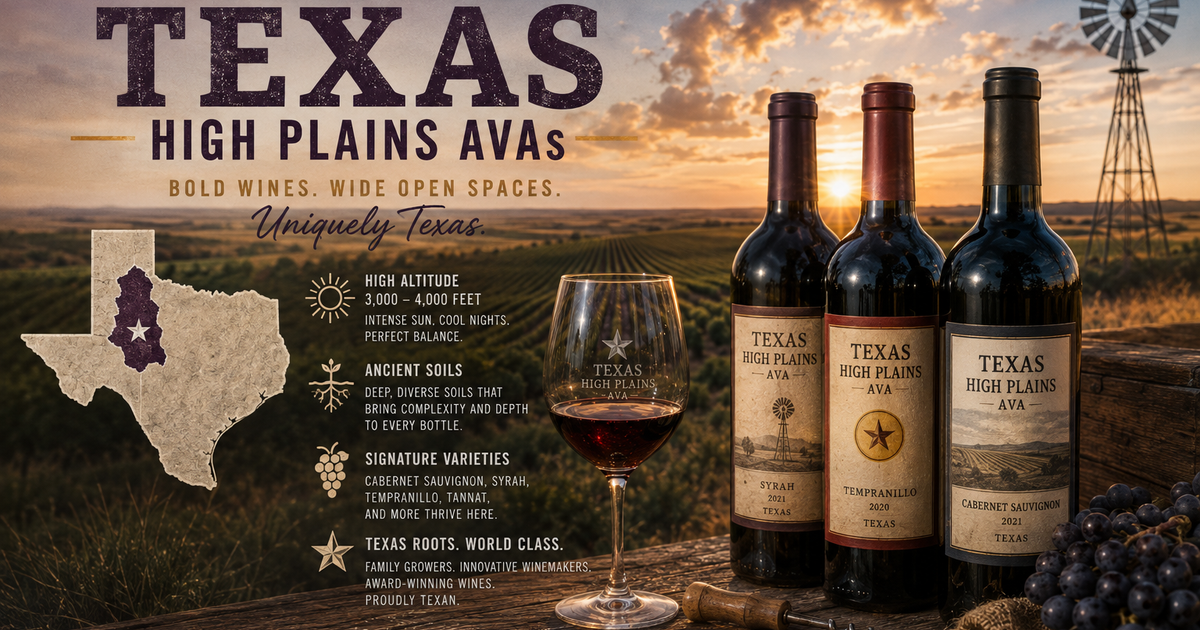
Not because it is the only place wine is made in Texas — the state has AVAs stretching from the Red River to the Rio Grande, from the Chihuahuan Desert to the Gulf Coast. Not because it grows the most grapes — that distinction belongs to the Texas High Plains, five hours to the northwest, where thousands of acres of vineyards supply fruit to wineries across the state. You start in Fredericksburg because this is where Texas wine became a culture, a destination, and a story that the rest of the country is finally starting to pay attention to.
Situated in Gillespie County about 70 miles west of Austin and 80 miles north of San Antonio, Fredericksburg is a small city of roughly 12,000 people that punches far above its weight in almost every category that matters to a wine traveler: the quality of the wineries, the depth of the food scene, the beauty of the surrounding landscape, and the sheer density of things worth doing within a short drive. On any given weekend, the Fredericksburg wine trail draws visitors from across Texas and beyond — people who come for a tasting room afternoon and end up staying for days.
This is the heart of Texas wine country. Here is what you need to know.
The Land: Limestone, Granite, and the Edwards Plateau
Fredericksburg sits on the Llano Uplift, the ancient geological formation that gives the Texas Hill Country its distinctive character. The Llano Uplift is a dome of Precambrian granite — some of the oldest exposed rock in North America — that pushes through the younger limestone of the Edwards Plateau in a roughly circular area centered on Llano County. The result is a patchwork of soils that varies dramatically over short distances: thin, rocky limestone in some areas; sandy, granite-derived soils in others; and occasional pockets of deeper, more fertile ground in the valley floors.
For viticulture, this variability is a gift. Different soils produce different wines, and the diversity of the Fredericksburg area means that producers can find sites suited to a wide range of varieties and styles. The limestone soils tend to produce wines with higher natural acidity and a mineral precision that reflects the calcium-rich substrate. The granite-derived soils — particularly on elevated sites like Bell Mountain to the north — produce wines with a different kind of mineral character, stony and electric, that experienced tasters can often identify blind.
The elevation of the Fredericksburg area ranges from about 1,700 to 2,000 feet above sea level — modest by the standards of the Davis Mountains or the High Plains, but meaningful in a state where altitude is one of the primary tools viticulturists use to manage heat. The Hill Country sits roughly 1,000 feet higher than the surrounding coastal plains, and that difference translates to meaningfully cooler temperatures, particularly at night.
The Climate: Hot Days, Cool Nights, and the Constant Wind
The Texas Hill Country climate is challenging by any measure, and the Fredericksburg area is no exception. Summers are hot — daytime highs regularly reach the mid-90s to low 100s Fahrenheit from June through August — and the intense solar radiation accelerates ripening in ways that demand careful attention from growers. Winters are mild by northern standards but cold enough to occasionally damage vines, and late spring frosts are a perennial threat that can wipe out an entire vintage's worth of young shoots in a single night.
But the climate also offers genuine advantages for the right varieties. The diurnal temperature swing — the difference between afternoon highs and nighttime lows — regularly exceeds 30 to 35 degrees Fahrenheit during the growing season, preserving natural acidity and aromatic complexity in grapes that ripen under intense Texas sun. The Hill Country wind, which blows almost constantly from the south and southwest, provides natural airflow through the vine canopy that reduces humidity and disease pressure. And the long growing season, stretching from bud break in March through harvest in September and October, gives grapes ample time to develop complexity.
Rainfall averages about 25 to 30 inches per year in the Fredericksburg area — more than the High Plains or the Escondido Valley, but still dry enough that many vineyards rely on supplemental irrigation during the summer months. The summer monsoon season, which brings afternoon thunderstorms from July through September, can be both a blessing and a curse: welcome moisture for stressed vines, but also the risk of hail and disease pressure that can damage fruit in the weeks before harvest.
A Brief History of Fredericksburg Wine
The modern wine history of Fredericksburg begins in the 1970s and 1980s, when a handful of pioneering producers began planting vineyards in the Hill Country and making the case that Texas could produce serious wine. The Texas Hill Country AVA was established in 1991, covering roughly 15,000 square miles across nine counties — one of the largest AVAs in the United States by area — and Fredericksburg quickly emerged as its commercial and cultural center.
The German heritage of the region played an interesting role in this development. Fredericksburg was founded in 1846 by German immigrants, and the town retains a strong German cultural identity to this day — in its architecture, its food traditions, its festivals, and its general disposition toward quality craftsmanship and communal celebration. That cultural DNA proved surprisingly well-suited to wine culture, and the town embraced the emerging wine scene with an enthusiasm that helped transform it from a regional curiosity into a genuine destination.
By the early 2000s, the Fredericksburg wine trail had become one of the most visited wine tourism destinations in the South. By the 2010s, it was drawing comparisons — sometimes overblown, sometimes not — to Napa Valley and the Willamette Valley. Today, with more than 50 wineries within easy driving distance of downtown Fredericksburg, it is unambiguously one of the most important wine tourism destinations in the United States.
Grapes of the Fredericksburg Area
Tempranillo
No variety has done more to establish the credibility of Fredericksburg-area wine than Tempranillo, and the reasons are clear once you understand the terroir. The grape's natural home — the elevated limestone plateaus of central Spain, where hot days and cold nights produce wines of concentration and elegance — shares meaningful parallels with the Texas Hill Country. The thin limestone soils stress the vine in productive ways, limiting vigor and concentrating flavor. The diurnal temperature swings preserve acidity and aromatic complexity. And the long, warm growing season allows the variety to develop the phenolic ripeness that gives Tempranillo its characteristic depth and structure.
Fredericksburg Tempranillo tends toward ripe dark cherry and plum fruit, with earthy, leathery undertones, firm but polished tannins, and a mineral backbone that reflects the limestone soils. The best examples are genuinely age-worthy — a quality that is still relatively rare in Texas wine — and they hold their own against serious Tempranillos from Rioja and Ribera del Duero. This is the variety that most clearly demonstrates what the Texas Hill Country can do at its best, and it is the one to seek out if you are new to the region.
Viognier
Among white varieties, Viognier has become the signature grape of the Texas Hill Country, and the Fredericksburg area produces some of the best examples in the state. The variety's thick skin provides some protection against the intense UV radiation and humidity, and it ripens reliably in the long, warm growing season. Fredericksburg Viognier is typically full-bodied and intensely aromatic — peach, apricot, white flowers, a hint of honeysuckle — with a richness and texture that suits the region's warm character.
The best examples walk a fine line between lushness and freshness, using the cold nights to preserve enough acidity to keep the wine from becoming flabby or over-ripe. At their best, they are genuinely compelling — wines that have no real equivalent in California or the Pacific Northwest, shaped by a specific combination of heat, altitude, and limestone that is uniquely Texan.
Mourvèdre
Mourvèdre has emerged as one of the most exciting red varieties in the Fredericksburg area, and several of the region's most serious producers consider it the grape that most honestly expresses the Hill Country terroir. The variety's thick skin provides excellent resistance to the humidity and disease pressure that can plague thinner-skinned varieties, and it ripens reliably in the long, warm growing season. Fredericksburg Mourvèdre tends toward dark fruit, earth, and a meaty, savory complexity — black olive, dried herbs, iron — that adds depth and structure to blends and can be compelling as a varietal wine in its own right.
Grenache
Grenache thrives in warm, dry conditions with good drainage, and the limestone hills around Fredericksburg provide exactly that. The variety produces wines here with red fruit concentration — cherry, raspberry, dried strawberry — and a spicy, herbal complexity that reflects both the grape's character and the distinctive terroir. Some producers make it as a varietal wine; others use it as the backbone of Rhône-style blends alongside Mourvèdre and Syrah. Either way, it is a variety that belongs in this landscape.
Syrah
Syrah performs well across the Hill Country, and the Fredericksburg area is no exception. The variety produces wines with deep color, concentrated dark fruit, and the peppery, meaty complexity that makes Syrah so compelling at its best. The limestone soils add a mineral quality that distinguishes Fredericksburg Syrah from its counterparts in warmer California regions, and the best examples show genuine structure and aging potential.
Cabernet Sauvignon
Cabernet Sauvignon is widely planted in the Fredericksburg area, and results range from genuinely impressive to merely adequate depending on the site, the vintage, and the producer's skill. The variety can struggle with the Hill Country's humidity and heat, producing wines that are either under-ripe and green or over-ripe and jammy when conditions are not ideal. But in the right sites — elevated, well-drained, with good airflow — and in the hands of skilled producers, Fredericksburg Cabernet can be excellent: dark fruit concentration, firm tannins, and a mineral backbone that gives the wine structure and longevity.
Sangiovese
Sangiovese has found a surprisingly comfortable home in the Texas Hill Country, and the Fredericksburg area has several producers working seriously with the variety. The grape's natural high acidity — one of its defining characteristics in its Tuscan homeland — is preserved by the cold nights, and the limestone soils add a mineral precision that echoes the great Chiantis of the Classico zone. Fredericksburg Sangiovese tends toward red cherry, dried herbs, and a savory earthiness, with firm tannins and bright acidity that make it one of the most food-friendly red wines produced in the state.
White Varieties
Beyond Viognier, Fredericksburg-area producers work with Roussanne, Marsanne, Chenin Blanc, Muscat Canelli, Albariño, and Vermentino, with varying degrees of success. Roussanne and Marsanne — the white grapes of the Northern Rhône — have shown real promise in the limestone soils, producing wines with a waxy, honeyed richness that is distinctive and food-friendly. Albariño, with its naturally high acidity and saline mineral character, is increasingly popular among producers looking for a white variety that can maintain freshness in the Hill Country heat.
Wineries of the Fredericksburg Area
Becker Vineyards
One of the most decorated and widely respected wineries in Texas, Becker Vineyards in Stonewall — just east of Fredericksburg on Highway 290 — has been producing benchmark Hill Country wines since 1992. The winery's estate vineyards are planted on the limestone slopes above the Pedernales River, and the wines they produce are consistently among the most polished and age-worthy in the state. The Tempranillo, Viognier, and Cabernet Sauvignon are the essential bottles, but the entire portfolio rewards exploration. The tasting room, surrounded by lavender fields that bloom spectacularly in spring, is one of the most beautiful winery settings in Texas.
William Chris Vineyards
Founded in 2008 by William Blackmon and Chris Brundrett, William Chris Vineyards has become one of the most influential and philosophically interesting wineries in Texas. The winery's commitment to 100 percent Texas-grown fruit — at a time when many Hill Country producers were blending in grapes from California or Washington — was a statement of principle that helped shift the conversation about what Texas wine could and should be. Their wines, made from estate and carefully sourced Hill Country fruit, are consistently among the most terroir-expressive in the state. The Enchante, a Mourvèdre-dominant blend, is one of the finest wines produced in Texas.
Pedernales Cellars
Perched on a hilltop with panoramic views of the surrounding Hill Country, Pedernales Cellars produces wines that match the drama of their setting. The winery focuses on Spanish and Rhône varieties — Tempranillo, Viognier, Grenache, Mourvèdre — that are well-suited to the Hill Country climate, and the results are consistently impressive. Their Tempranillo Reserve is one of the benchmark expressions of the variety in Texas, and the tasting room experience — with its sweeping views and thoughtful hospitality — is among the best in the region.
Kuhlman Cellars
Kuhlman Cellars has quickly established itself as one of the most serious and thoughtful producers in the Hill Country since its founding in 2014. The winery's focus on estate-grown fruit and minimal-intervention winemaking has produced wines that show genuine terroir expression, and the tasting room — designed with the same attention to detail as the wines themselves — is one of the most architecturally striking in the region. Their Roussanne and Tempranillo are particular highlights.
Grape Creek Vineyards
One of the most visitor-friendly wineries in the Fredericksburg area, Grape Creek Vineyards offers a full resort experience — tasting rooms, a restaurant, accommodations, and event spaces — alongside a solid portfolio of Hill Country wines. The winery is a good introduction to the region for first-time visitors, and the estate setting, with its manicured vineyards and Hill Country views, is genuinely beautiful.
Signor Vineyards
A newer addition to the Fredericksburg wine scene, Signor Vineyards has quickly built a reputation for producing some of the most elegant and restrained wines in the Hill Country. The winery's focus on lower-intervention winemaking and varieties that express the limestone terroir — Tempranillo, Mourvèdre, Grenache — has produced wines that stand out in a region where bold, extracted styles are common. Their single-vineyard releases are among the most compelling wines being made in Texas today.
Enchanted Rock Vineyards
Named for the famous pink granite dome that rises from the Hill Country floor about 18 miles north of Fredericksburg, Enchanted Rock Vineyards draws on the granite-influenced soils of the Llano Uplift for wines that have a distinctive mineral character. The winery produces a range of varieties, with Tempranillo and Viognier among the strongest offerings, and the tasting room setting — with views toward the granite hills — is one of the more evocative in the region.
Hilmy Cellars
A family-owned winery with deep roots in the Fredericksburg community, Hilmy Cellars produces wines that reflect the Hill Country's diversity of varieties and styles. The winery is particularly strong on white wines — their Viognier and Roussanne are consistently among the best in the region — and the tasting room has a warm, welcoming atmosphere that embodies the best of Texas Hill Country hospitality.
Lost Draw Cellars (Fredericksburg Tasting Room)
While Lost Draw Cellars is based in Alpine in the Davis Mountains region, the winery maintains a tasting room in Fredericksburg that brings West Texas wines to the Hill Country audience. It is a good place to compare the two regions side by side and to understand how dramatically different Texas wine can be depending on where the grapes are grown.
The Wine Road 290 Experience
The stretch of US Highway 290 between Johnson City and Fredericksburg — known informally as the Wine Road — is the spine of the Texas Hill Country wine trail and one of the most concentrated wine tourism corridors in the United States. More than 40 wineries line this 30-mile stretch of highway, ranging from large, resort-style operations with restaurants and event spaces to small, family-run estates where the winemaker pours the wine and knows every visitor by name.
Driving the Wine Road on a weekend afternoon is an experience unlike anything else in Texas wine. The landscape is beautiful — rolling limestone hills, live oak mottes, the occasional dramatic granite outcropping — and the density of wineries means you can visit three or four in an afternoon without driving more than a few miles between stops. The quality varies, as it does in any wine region with this many producers, but the best wineries on the Wine Road are producing wines that deserve serious attention.
A few practical notes for first-time visitors: weekends are busy, particularly in spring (wildflower season) and fall (harvest season). Many wineries require reservations for seated tastings, and the most popular ones can book up weeks in advance. If you want a more relaxed experience, consider visiting on a weekday, when the crowds thin out and the winemakers have more time to talk.
Fredericksburg Beyond the Wine Trail
Fredericksburg is a genuinely charming town with more to offer than wine, and the best visits combine winery time with exploration of the broader community.
The historic Main Street is lined with shops, galleries, and restaurants that reflect the town's German heritage and its evolution into a sophisticated small-city destination. The National Museum of the Pacific War — one of the finest World War II museums in the country, located here because Fredericksburg was the birthplace of Fleet Admiral Chester Nimitz — is worth a half-day on its own. Enchanted Rock State Natural Area, 18 miles north of town, offers some of the best hiking in Central Texas and the surreal experience of walking across a billion-year-old granite dome.
The food scene has grown dramatically alongside the wine scene, and Fredericksburg now has a range of restaurants that would be at home in Austin or San Antonio. Several of the larger wineries have their own restaurants or food programs, and the combination of good wine and good food in a beautiful Hill Country setting is one of the region's most compelling attractions.
Fredericksburg in the Texas Wine Story
Every wine region has a place in the larger story of American wine, and Fredericksburg's place is clear: it is where Texas wine became a culture rather than a curiosity, where the combination of quality producers, beautiful landscape, and genuine hospitality created something that visitors wanted to return to and tell their friends about.
The wines being made here are not perfect — no wine region's wines are — and the Hill Country still has work to do in establishing a consistent identity that wine drinkers outside Texas can easily grasp. But the best Fredericksburg-area wines are genuinely excellent: honest expressions of a distinctive terroir, made by producers who understand their land and are committed to making the best wine it can produce.
That is the foundation of any great wine region. And in Fredericksburg, that foundation is solid.
Planning Your Visit
Getting there: Fredericksburg is about 70 miles west of Austin on US Highway 290, a drive of roughly 90 minutes. From San Antonio, take Interstate 10 west to Highway 87 north — about 80 miles and 90 minutes. There is no commercial air service to Fredericksburg; the nearest major airports are Austin-Bergstrom and San Antonio International.
When to go: Spring (March–May) is peak season, with wildflowers blooming across the Hill Country and temperatures in the comfortable 60s and 70s. Fall (September–November) is harvest season, with winery events and the pleasure of watching the vineyards come alive with activity. Summer is hot but manageable if you plan outdoor activities for the morning and save the tasting rooms for the afternoon. Winter is quiet and uncrowded — a good time to visit if you prefer a more relaxed experience.
Where to stay: Fredericksburg has an abundance of accommodation options, from historic bed-and-breakfasts in the German Sunday Houses to modern resort properties on the Wine Road. Book well in advance for spring and fall weekends, when the town fills up quickly.
How many wineries: Two to three wineries per day is a comfortable pace for most visitors. More than that and the tastings start to blur together. Pick your priorities in advance — the wineries listed above are a good starting point — and leave room for spontaneous stops at places that catch your eye.
The Bottom Line
Fredericksburg is where Texas wine makes its best case to the world. It is not the only place worth visiting in the Texas wine landscape — the High Plains, the Davis Mountains, the Mesilla Valley, and the Escondido Valley all have their own compelling stories to tell. But it is the place where all the elements come together most completely: the quality of the wines, the beauty of the landscape, the depth of the food and hospitality culture, and the sheer density of things worth doing.
If you have not been, go. If you have been, go back. The Texas Hill Country wine story is still being written, and Fredericksburg is where the most important chapters are taking shape.
Explore Topics
Written by
Chuck
Chuck Hoeffler is the founder and editor of The American Vine. He loves tasting and writing about American wine, with a particular focus on regions and wineries that deserve more attention than they typically receive.