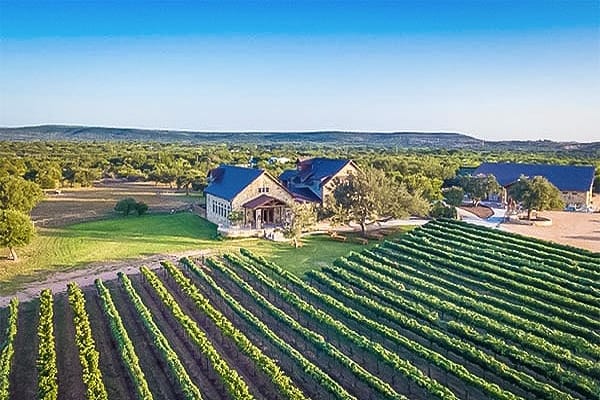
Davis Mountains: West Texas Wine at the Top of the World
Rising dramatically from the Chihuahuan Desert floor, the Davis Mountains of far West Texas are home to one of the most exciting and least-known wine frontiers in America — where volcanic soils, mile-high altitude, and a handful of visionary producers are crafting wines of remarkable elegance and intensity.

There is a moment, driving west on Highway 118 out of Alpine toward Fort Davis, when the landscape does something unexpected. The flat, scrubby Chihuahuan Desert floor — which has been your companion for hours — begins to buckle and rise. The road climbs. The air cools. Juniper and piñon pine appear where there was nothing but creosote and ocotillo. And then the Davis Mountains open up around you: a sky island rising nearly a mile above the surrounding desert, green and dramatic and completely unlike anything else in Texas.
This is where some of the most interesting wine in the state is being made.
The Davis Mountains are not a federally designated AVA — at least not yet. But the region around Fort Davis, Alpine, and Marfa in the Trans-Pecos area of far West Texas has emerged over the past two decades as one of the most compelling wine frontiers in America. A combination of volcanic soils, extreme altitude, dramatic diurnal temperature swings, and a community of producers who came here specifically because the land was unlike anywhere else has produced a wine scene that is genuinely unlike anything else in Texas — or, for that matter, in the United States.
The Geography of a Sky Island
The Davis Mountains are what geologists call a sky island — an isolated mountain range that rises abruptly from a surrounding lowland desert, creating a distinct ecological zone that shares more in common with the Rocky Mountains than with the desert floor below. The range is centered on Jeff Davis County, with the town of Fort Davis sitting at roughly 5,050 feet above sea level. The highest peaks — including Mount Livermore at 8,378 feet — push well above timberline.
The wine country of the Davis Mountains region is concentrated in the valleys and slopes between about 4,500 and 6,000 feet elevation, primarily in the areas around Fort Davis, Marfa, and Alpine. That elevation is the defining fact of viticulture here. It is higher than the Texas High Plains, higher than the Mesilla Valley, higher than almost anywhere else wine grapes are grown in the American South. And it changes everything.
The surrounding Trans-Pecos region — which encompasses the broader area of far West Texas including Big Bend country — is one of the most sparsely populated and geographically dramatic landscapes in the continental United States. The nearest major city is Midland-Odessa, about 200 miles to the northeast. El Paso is 200 miles to the west. San Antonio is nearly 400 miles to the east. This is genuinely remote country, and the wine being made here reflects that isolation in the best possible way — it has not been shaped by proximity to markets or trends, but by the land itself.
Volcanic Soils: The Secret Weapon
If there is one thing that distinguishes the Davis Mountains wine region from every other wine-producing area in Texas, it is the soils. While the Hill Country sits on limestone, the High Plains on sandy loam, and the Escondido Valley on calcareous alluvium, the Davis Mountains are underlain by ancient volcanic rock — the remnants of massive eruptions that occurred roughly 35 to 38 million years ago, when this part of Texas was geologically active in ways that are hard to imagine today.
The result is a patchwork of volcanic soils — rhyolite, tuff, basalt, and their weathered derivatives — that are fundamentally different from anything else in the Texas wine landscape. Volcanic soils are typically well-drained, low in organic matter, and rich in minerals that vines can access through deep root systems. They stress the vine in productive ways, limiting vigor and concentrating flavor in the fruit. And they impart a distinctive mineral quality to the wines — a kind of volcanic earthiness, a stony intensity — that experienced tasters can often identify blind.
This is the same soil type that underlies some of the world's most celebrated wine regions: the volcanic soils of Etna in Sicily, the basalt-derived soils of the Columbia Valley's Rocks District in Washington, the rhyolitic soils of parts of the Willamette Valley. The Davis Mountains are not those places, and the wines are not trying to be. But the geological kinship is real, and it shows in the glass.
The Climate: Altitude Changes Everything
The Davis Mountains climate is a study in extremes that somehow resolve into something hospitable for wine grapes — at least the right wine grapes, grown in the right places.
Summer days are warm but not brutal by Texas standards. At 5,000 feet, the intense solar radiation accelerates ripening, but the altitude keeps afternoon temperatures in the mid-80s to low 90s Fahrenheit on most days — a far cry from the 100-plus-degree heat that bakes the Escondido Valley and the High Plains. The growing season is long, stretching from bud break in April through harvest in September and October, giving grapes ample time to develop complexity without the frantic race against heat that defines viticulture in lower-elevation Texas regions.
The nights are cold. Genuinely cold. Even in the height of summer, temperatures in the Davis Mountains regularly drop into the 50s Fahrenheit after sunset, and cool nights in the 40s are not unusual in September and October as harvest approaches. The diurnal temperature swing — the difference between the warmest part of the afternoon and the coolest part of the night — routinely exceeds 40 degrees Fahrenheit. That dramatic shift is the engine of aromatic complexity and natural acidity in the grapes, preserving the freshness and structure that make wine interesting rather than merely alcoholic.
Rainfall is modest — typically 15 to 20 inches per year, concentrated in the summer monsoon season from July through September — but meaningfully higher than the surrounding desert. Many vineyards in the region can be dry-farmed or require only supplemental irrigation, which is unusual in West Texas and speaks to the relative generosity of the mountain climate.
The main challenges are late spring frosts, which can damage young shoots in April and May, and the occasional severe hailstorm that rolls through during the summer monsoon season. Producers have learned to manage these risks through site selection — favoring slopes with good cold-air drainage — and through careful canopy management that protects developing fruit clusters.
Grapes of the Davis Mountains
Tempranillo
No variety has proven more consistently expressive in the Davis Mountains than Tempranillo, and the reasons are not hard to understand. The grape's natural home — the elevated plateaus of central Spain, where hot days and cold nights produce wines of concentration and elegance — shares meaningful climatic parallels with the Davis Mountains. The volcanic soils add a mineral dimension that the best Spanish Tempranillos also possess, and the long, cool growing season allows the variety to develop complexity without losing freshness.
Davis Mountains Tempranillo tends toward a more elegant, restrained style than the bold, extracted expressions common in warmer Texas regions. Dark cherry, dried herbs, leather, and a distinctive mineral undercurrent characterize the best examples. The tannins are firm but refined, and the wines have genuine aging potential — a quality that is still relatively rare in Texas wine.
Cabernet Franc
Cabernet Franc has found a particularly comfortable home in the Davis Mountains, and several producers consider it the variety that most clearly expresses the region's terroir. The grape's affinity for cooler growing conditions — it is the dominant variety in the Loire Valley's Chinon and Bourgueil, and an important component in the cooler parts of Bordeaux — translates directly to the mountain climate. Davis Mountains Cabernet Franc shows the variety's characteristic aromatic complexity: red fruit, graphite, dried herbs, a hint of violet — with a freshness and precision that is genuinely impressive for a Texas wine.
Albariño
Among white varieties, Albariño has emerged as one of the most exciting discoveries in the Davis Mountains wine scene. The grape's origins in the cool, wet Atlantic coast of Galicia in northwestern Spain might seem an unlikely match for the Chihuahuan Desert, but the Davis Mountains' altitude and cold nights create conditions that preserve the variety's natural acidity and aromatic intensity. Davis Mountains Albariño is typically crisp and mineral — stone fruit, citrus zest, saline notes — with a freshness that is genuinely surprising given the surrounding landscape. It is one of the most distinctive white wines being made in Texas.
Grenache
Grenache thrives in warm, dry conditions with good drainage, and the volcanic slopes of the Davis Mountains provide exactly that. The variety produces wines here with red fruit concentration — cherry, raspberry, dried strawberry — and a spicy, herbal complexity that reflects both the grape's character and the distinctive terroir. Some producers make it as a varietal wine; others use it as the backbone of Rhône-style blends. Either way, it is a variety that belongs in this landscape.
Mourvèdre
As part of the classic Rhône trinity alongside Grenache and Syrah, Mourvèdre has shown real promise in the Davis Mountains. The variety's thick skin provides some protection against the intense UV radiation at altitude, and it ripens reliably in the long, warm growing season. Davis Mountains Mourvèdre tends toward dark fruit, earth, and a meaty, savory complexity that adds depth and structure to blends — and can be compelling as a varietal wine in its own right.
Syrah
Syrah performs well across much of West Texas, and the Davis Mountains are no exception. The volcanic soils add a distinctive mineral and peppery quality to the variety's natural dark fruit and meaty complexity, producing wines that have more in common with the Northern Rhône than with the jammy, high-alcohol Syrahs common in warmer California regions. The best examples from the Davis Mountains are structured, age-worthy, and genuinely exciting.
Other Varieties
Producers in the region also work with Viognier, Roussanne, Marsanne, Malbec, and a range of other varieties suited to warm days and cold nights. Viognier, in particular, can be stunning here — the altitude preserves the variety's aromatic intensity while the cold nights keep it from becoming flabby or over-ripe. Roussanne and Marsanne, the white grapes of the Northern Rhône, are less common but show real promise in the volcanic soils.
Wineries of the Davis Mountains Region
Ste. Genevieve at Fort Stockton (Davis Mountains Fruit)
While Ste. Genevieve Winery is primarily associated with the Escondido Valley AVA near Fort Stockton, the winery has sourced fruit from Davis Mountains-area vineyards and helped establish the region's viticultural credibility. Their scale and distribution have been important in getting Trans-Pecos wines in front of Texas consumers who might otherwise never encounter them.
Marfa Table Wines
One of the most talked-about new producers in far West Texas, Marfa Table Wines has built a devoted following among wine enthusiasts who appreciate its commitment to minimal-intervention winemaking and its focus on varieties that express the volcanic terroir of the Davis Mountains region. The winery's tasting room in Marfa — the small arts-and-culture town that has become one of the most culturally distinctive destinations in Texas — draws visitors from across the state and beyond. Their Tempranillo and Albariño are among the most compelling wines being made in West Texas.
Kiepersol Estates
While Kiepersol's primary operation is in East Texas near Tyler, the winery has been an important voice in the broader Texas wine conversation and sources fruit from across the state, including the Trans-Pecos region. Their engagement with West Texas terroir has helped build awareness of what the Davis Mountains can produce.
Lost Draw Cellars
Based in Alpine — the small university town that serves as the cultural hub of the Big Bend region — Lost Draw Cellars is one of the most important producers in the Davis Mountains wine scene. The winery focuses on estate and locally sourced fruit, with an emphasis on varieties that thrive in the high-desert mountain climate. Their portfolio spans Tempranillo, Cabernet Franc, Albariño, and Grenache-based blends, and the wines consistently show the mineral intensity and aromatic complexity that define the best Davis Mountains expressions. Lost Draw has been instrumental in establishing Alpine as a wine destination in its own right.
Barking Rocks Winery
Located in Wimberley in the Hill Country but sourcing significant fruit from the Davis Mountains region, Barking Rocks has been an advocate for Trans-Pecos viticulture and has helped introduce Davis Mountains wines to the broader Texas wine audience. Their single-vineyard releases from West Texas fruit are among the most interesting wines in their portfolio.
Blue Owl Winery
A newer addition to the Davis Mountains wine scene, Blue Owl Winery in the Fort Davis area has quickly established itself as a producer worth watching. The focus is on estate-grown fruit from volcanic soils, with winemaking that emphasizes transparency and terroir expression over extraction and manipulation. Early releases have shown the kind of mineral precision and aromatic complexity that the Davis Mountains terroir is capable of producing at its best.
The Marfa Effect: Art, Culture, and Wine
No discussion of the Davis Mountains wine region is complete without acknowledging the cultural context that makes this corner of West Texas unlike anywhere else in the state.
Marfa — a small town of about 1,800 people sitting at 4,688 feet in the high desert — has been one of the most improbable cultural destinations in America since the minimalist artist Donald Judd began installing his monumental works there in the 1970s. Today, Marfa is home to world-class contemporary art institutions, acclaimed restaurants, a thriving arts community, and a steady stream of visitors from New York, Los Angeles, and beyond who come for the art and stay for the landscape.
That cultural infrastructure has been enormously beneficial for the Davis Mountains wine scene. The kind of visitor who travels to Marfa to see the Chinati Foundation is also the kind of visitor who is interested in discovering a distinctive regional wine — someone who values authenticity, place, and the particular character that comes from a specific landscape. The wine producers of the Davis Mountains have found a natural audience in the Marfa arts community, and the relationship has been mutually reinforcing.
The result is a wine scene that feels genuinely integrated into a broader cultural moment — not a tourist attraction grafted onto a landscape, but an organic expression of a community that has chosen to live and work in one of the most beautiful and remote places in America.
How the Davis Mountains Fit the Texas Wine Story
Texas wine is often told as a story of scale — the Hill Country's hundreds of wineries, the High Plains' thousands of acres of vineyards, the sheer ambition of a state that has decided it can compete with California and the Pacific Northwest. The Davis Mountains tell a different story: smaller, quieter, more focused on the particular character of a specific place.
The wines being made here are not trying to be the biggest or the boldest or the most commercially successful. They are trying to be honest expressions of a landscape that is genuinely unlike anywhere else — volcanic soils, mile-high altitude, cold nights, and the vast, dramatic sky of the Trans-Pecos. That kind of terroir-driven ambition is exactly what makes regional American wine worth exploring, and the Davis Mountains are one of the clearest examples of it anywhere in the country.
As the region continues to develop — more vineyards, more producers, potentially a formal AVA designation that would give it the official recognition it deserves — the Davis Mountains are poised to become one of the most talked-about wine regions in America. The bones are already there. The terroir is real. The producers are serious. All that is missing is the audience.
Visiting the Davis Mountains
The Davis Mountains region is a genuine destination, and not just for wine. Fort Davis National Historic Site — one of the best-preserved frontier military posts in the American West — is worth a half-day on its own. McDonald Observatory, perched on Mount Locke at 6,791 feet, offers some of the darkest skies in the continental United States and hosts public star parties that are among the most memorable experiences in Texas. Davis Mountains State Park has excellent hiking and camping. And Marfa, 21 miles to the south, is one of the most culturally rich small towns in America.
The best time to visit for wine is fall — September through November — when harvest activity is winding down and the mountain temperatures are at their most comfortable. The summer monsoon season (July–August) brings dramatic afternoon thunderstorms that are spectacular to watch but can make outdoor activities unpredictable. Spring (March–May) is also excellent, with wildflowers and mild temperatures.
Plan to spend at least two or three days. The distances between wineries, attractions, and towns are significant — this is West Texas, after all — and the landscape rewards slow travel. Drive the scenic loop through the Davis Mountains State Park. Stop at the Marfa Lights viewing area after dark. Eat at one of Alpine's surprisingly good restaurants. And drink the wine slowly, paying attention to what it is telling you about the place it came from.
The Bottom Line
The Davis Mountains wine region is one of the best arguments for the proposition that American wine is still in the process of discovering itself. Here, in one of the most remote and dramatic landscapes in the country, a community of producers is making wines from volcanic soils at mile-high altitude that have no real precedent in the American wine canon. They are not imitating anyone. They are not chasing a trend. They are making the wines that this specific, extraordinary place seems to want to produce.
That is a story worth following. And the wines are worth drinking.
Explore Topics
Written by
Chuck
Chuck Hoeffler is the founder and editor of The American Vine. He loves tasting and writing about American wine, with a particular focus on regions and wineries that deserve more attention than they typically receive.