Escondido Valley AVA: West Texas Wine in the Shadow of the Pecos
Deep in the Chihuahuan Desert between Fort Stockton and the Pecos River, the Escondido Valley AVA is one of the most remote and least-known wine regions in America — and one of the most quietly compelling. High altitude, extreme aridity, and a handful of stubborn believers are making something worth the detour.

Pull up a map of Texas wine country and your eye goes immediately to the Hill Country west of Austin, maybe the High Plains up near Lubbock. The Escondido Valley AVA does not appear on most people's mental maps of American wine at all. It sits in the deep Chihuahuan Desert of West Texas, roughly halfway between San Antonio and El Paso, in a stretch of country that most Americans have never visited and could not easily locate on a map.
That remoteness is part of what makes it interesting.
The Escondido Valley is one of the smallest and most isolated AVAs in the United States. It is not a wine tourism destination in any conventional sense. There are no charming tasting room villages, no weekend getaway infrastructure, no wine trail brochures at the visitor center. What there is, however, is a genuinely distinctive terroir — high-desert altitude, extreme aridity, ancient soils, and a climate that pushes vines to their limits in ways that can produce wines of real depth and character.
For the wine drinker willing to look past the obvious, it is a region worth understanding.
Where Exactly Is the Escondido Valley?
The Escondido Valley AVA was established by the TTB in 1992, making it one of the older federally recognized wine regions in Texas. It covers a relatively compact area in Pecos County in far West Texas, centered roughly around the town of Fort Stockton — a small city of about 8,000 people that sits at the crossroads of Interstate 10 and US Highway 285, about 230 miles southeast of El Paso.
The "valley" in the name refers to the broad, gently sloping basin formed by the drainage of Comanche Creek and its tributaries as they work their way toward the Pecos River to the east. It is not a valley in the dramatic, canyon-carved sense — this is West Texas, where the landscape tends toward the vast and horizontal rather than the vertical and rugged. But the basin does create a distinct microclimate, sheltered from the worst of the desert winds and sitting at elevations between 2,700 and 3,000 feet above sea level.
That elevation is modest compared to the Texas High Plains or the Mesilla Valley, but it is enough to meaningfully moderate temperatures in a region where summer days can push well past 100 degrees Fahrenheit.
The Climate: Extreme by Any Measure
Growing wine grapes in the Escondido Valley is not a casual undertaking. The climate here is about as demanding as it gets in American viticulture — and that is saying something in a state that already tests its growers with heat, humidity, hail, and late freezes.
Annual rainfall in the Fort Stockton area averages around 12 to 14 inches — barely enough to sustain dryland farming of any kind, let alone wine grapes. Irrigation is not optional here; it is existential. The region draws on groundwater from the Pecos Valley aquifer system, though water availability and long-term sustainability are ongoing concerns that every producer in the region has to reckon with.
Summer temperatures are extreme. Daytime highs regularly exceed 100 degrees Fahrenheit from June through August, and the intense solar radiation at this latitude and elevation accelerates ripening dramatically. Growers have to watch their vineyards carefully during the peak of summer, harvesting at precisely the right moment to capture freshness before the heat drives alcohol too high and burns off the aromatics.
But the nights are the saving grace. The Chihuahuan Desert cools rapidly after sunset, and the Escondido Valley regularly sees diurnal temperature swings of 35 to 45 degrees Fahrenheit between the heat of the afternoon and the chill of the early morning. That dramatic shift — the same phenomenon that makes the Finger Lakes and the Columbia Valley so compelling for wine — preserves acidity and aromatic complexity in grapes that ripen under punishing daytime conditions.
The result is a paradox that defines desert viticulture at its best: wines with the concentration and body that come from intense sun and heat, balanced by the freshness and structure that come from cold nights and naturally high acidity. When it works, it is genuinely exciting. When it does not — when the heat wins, or the water runs short, or a late freeze catches the vines off guard — the results can be humbling.
The soils add another layer of complexity. The Escondido Valley sits on deep, calcareous soils — limestone-rich, well-drained, and low in organic matter. These are soils that stress vines in productive ways, limiting vigor and forcing roots to dig deep for water and nutrients. The wines that come from them tend to have a mineral quality, a kind of stony austerity, that distinguishes them from the richer, more opulent styles produced in more fertile ground.
A Brief History
The modern wine history of the Escondido Valley is inseparable from one name: Ste. Genevieve Winery.
In the early 1980s, a partnership between the University of Texas and a French wine company — Cordier Estates — established a large-scale vineyard operation in the Escondido Valley, taking advantage of land owned by the University of Texas that had long been used for oil and gas production. The project was ambitious by any standard: hundreds of acres of vines planted in the West Texas desert, with the goal of producing commercial-scale wine from a region that had no winemaking tradition and no established market.
The University of Texas connection was not incidental. The UT System owns vast tracts of West Texas land, much of it in Pecos County, and the Permanent University Fund — the endowment that supports UT and Texas A&M — has historically been funded by oil and gas royalties from these lands. The vineyard project was an attempt to diversify that income stream and, not incidentally, to prove that West Texas could produce serious wine.
The experiment worked, at least in part. Ste. Genevieve became one of the largest wineries in Texas by volume, producing wines that ranged from everyday table wine to more serious varietal expressions. The French winemaking influence brought technical rigor to a region that was still figuring out its identity, and the sheer scale of the operation helped establish the Escondido Valley as a legitimate wine-producing area rather than a curiosity.
The winery has changed hands and evolved over the decades, but it remains the anchor of the Escondido Valley wine scene — a reminder that this remote corner of West Texas has been making wine seriously for more than forty years.
Grapes of the Escondido Valley
Cabernet Sauvignon
Cabernet Sauvignon is the workhorse of the Escondido Valley, and in the right hands it produces wines that show why the variety has conquered so much of the world's warm wine country. The combination of intense sun, cold nights, and calcareous soils gives Escondido Valley Cabernet a distinctive profile: dark fruit concentration — blackcurrant, black cherry, dark plum — with firm tannins, good acidity for the climate, and a mineral undercurrent that reflects the limestone-rich soils. The best examples are structured and age-worthy, with a West Texas character that is genuinely different from Napa or even the Texas Hill Country.
Tempranillo
As in the Mesilla Valley and the Texas High Plains, Tempranillo has proven itself one of the most reliable and expressive varieties in the Escondido Valley. The grape's affinity for hot, dry climates with cold nights translates directly to the Chihuahuan Desert, and the wines it produces here — dark fruit, leather, dried herbs, firm tannins — have a Iberian quality that makes intuitive sense given the Spanish colonial history of the entire region. Tempranillo is increasingly the variety that serious producers in West Texas point to as the clearest expression of what their terroir can do.
Chenin Blanc
Among white varieties, Chenin Blanc has shown surprising adaptability to the Escondido Valley's extreme conditions. The variety's naturally high acidity — one of its defining characteristics in its Loire Valley homeland — is preserved by the cold desert nights, producing wines with a tension between tropical ripeness and bright, refreshing freshness. Escondido Valley Chenin Blanc is not a common wine, but the examples that exist are worth seeking out: they have a distinctly Southwestern character, with stone fruit and citrus notes backed by a mineral crispness that the limestone soils seem to encourage.
Sauvignon Blanc
Sauvignon Blanc ripens early, which is an advantage in a climate where the window between ideal ripeness and over-ripeness can be narrow. The variety produces wines here with a more tropical, full-bodied character than its cooler-climate counterparts in New Zealand or the Loire — less herbaceous, more stone fruit and melon — but with enough acidity to stay fresh and food-friendly. It is a reliable white variety for the region and a good introduction to what Escondido Valley whites can offer.
Other Varieties
Producers in the Escondido Valley also work with Merlot, Chardonnay, Muscat Canelli, and various blending varieties. Merlot can be plush and approachable in this climate, with the warmth filling out the variety's naturally soft tannins. Chardonnay is more challenging — the heat can strip it of the delicacy that makes the variety compelling — but producers who harvest early and use careful winemaking can produce interesting results. Muscat Canelli, with its intensely aromatic character and natural sweetness, is a natural fit for the desert climate and makes for charming, food-friendly wines.
Wineries of the Escondido Valley
Ste. Genevieve Winery
The founding institution of Escondido Valley wine, Ste. Genevieve Winery in Fort Stockton remains the largest and most visible producer in the AVA. The winery draws on hundreds of acres of estate vineyards planted in the Chihuahuan Desert, producing a wide range of wines from everyday table wine to more serious varietal expressions. The scale of the operation is impressive — this is industrial-scale winemaking by Texas standards — but the best wines in the portfolio show genuine character and reflect the distinctive terroir of the region. Ste. Genevieve is the place to start if you want to understand what the Escondido Valley is about, and their wines are widely distributed across Texas.
Pecos Valley Wine Company
A smaller, more boutique operation than Ste. Genevieve, Pecos Valley Wine Company represents the artisanal side of Escondido Valley winemaking. The focus here is on estate-grown fruit and small-lot production, with an emphasis on varieties that express the desert terroir most clearly. Their Tempranillo and Cabernet Sauvignon are among the most compelling wines produced in the AVA, showing the concentration and mineral character that the Chihuahuan Desert soils can produce when yields are kept in check and the winemaking is thoughtful.
Haak Vineyards and Winery
While Haak Vineyards is primarily associated with the Gulf Coast region near Galveston, the winery sources fruit from the Escondido Valley for several of its varietal wines, recognizing the quality potential of the high-desert terroir. The Haak operation is a good example of how Texas winemakers are increasingly looking to the state's diverse AVAs for specific varieties and flavor profiles, blending fruit from different regions to achieve complexity and balance.
The Escondido Valley in the Texas Wine Story
Texas wine is a story of extremes — extreme heat, extreme aridity, extreme distances, and extreme ambition. The Escondido Valley embodies all of those qualities more completely than perhaps any other region in the state.
It is not the most accessible Texas wine region. Fort Stockton is a long drive from anywhere most Texans live, and the wine tourism infrastructure that has developed around the Hill Country simply does not exist here. The Escondido Valley is a producer's region, not a visitor's region — a place where the work of growing grapes and making wine happens largely out of sight, in a landscape that most Americans will never see.
But that remoteness is also part of what makes the wines interesting. The Escondido Valley has not been shaped by tourism or trend-chasing. It has been shaped by the land itself — by the limestone soils, the desert sun, the cold nights, and the Pecos River that has defined life in this part of Texas for centuries. The wines that come from it carry that character in ways that are unmistakable once you know what to look for.
In the broader context of Texas wine, the Escondido Valley sits alongside the High Plains and the Mesilla Valley as one of the state's most important but least-celebrated production regions. While the Hill Country gets the weekend visitors and the Instagram posts, these western AVAs are doing some of the most serious and distinctive viticulture in the state — growing grapes in conditions that would defeat most producers, and making wines that reward the drinkers willing to seek them out.
Visiting the Escondido Valley
A visit to the Escondido Valley requires commitment. Fort Stockton is about 230 miles from San Antonio, 300 miles from Austin, and 230 miles from El Paso — a genuine road trip from any major Texas city. Interstate 10 runs directly through the area, which makes it a natural stop on a longer West Texas journey, but it is not the kind of place you visit on a whim.
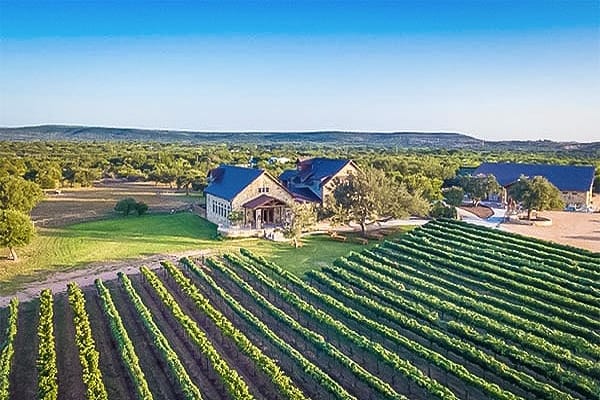
That said, the surrounding landscape is spectacular in a way that is hard to convey in words. The Chihuahuan Desert has a stark, austere beauty — vast skies, distant mountains, the occasional dramatic canyon — that is completely unlike anything in the Hill Country or the High Plains. Big Bend National Park is about 100 miles to the south, and a Escondido Valley winery visit pairs naturally with a few days in one of the most dramatic landscapes in North America.
The best time to visit is fall (September–November), when harvest activity is winding down and temperatures are more moderate. Spring (March–May) is also pleasant. Summer visits are possible but require a genuine tolerance for desert heat — this is not the time to be wandering through vineyards in the middle of the afternoon.
If you are building a West Texas wine itinerary, consider pairing an Escondido Valley visit with a stop in the Mesilla Valley to the west and the Texas High Plains to the north. Together, the three regions tell the story of West Texas viticulture in full — from the ancient Rio Grande corridor to the wind-swept Llano Estacado, with the Chihuahuan Desert at the center.
The Bottom Line
The Escondido Valley AVA will never be a household name in American wine. It is too remote, too small, and too far outside the mainstream wine tourism circuit to achieve that kind of recognition. But for the drinker who values authenticity, distinctiveness, and the particular character that comes from growing grapes in genuinely extreme conditions, it offers something that the more famous regions cannot: wines that could only come from this specific, strange, beautiful corner of West Texas.
That is worth knowing about. And it is worth drinking.
Explore Topics
Written by
Chuck
Chuck Hoeffler is the founder and editor of The American Vine. He loves tasting and writing about American wine, with a particular focus on regions and wineries that deserve more attention than they typically receive.