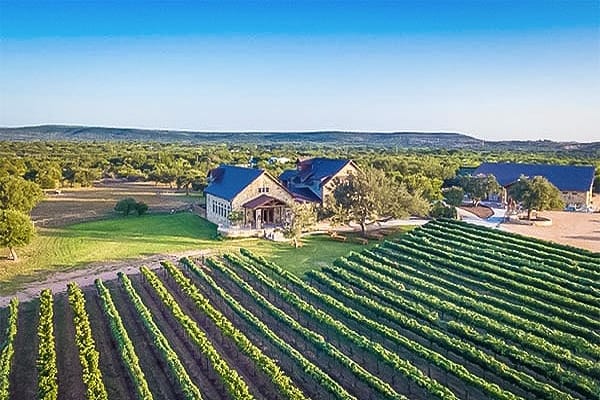
Mesilla Valley AVA: Where the Rio Grande Meets the Vine
Straddling the Texas–New Mexico border along the Rio Grande, the Mesilla Valley AVA is one of America's oldest and most overlooked wine regions — a high-desert corridor where ancient soils, blazing sun, and cool desert nights produce wines of genuine character and surprising elegance.

There is a stretch of the Rio Grande valley, running from just south of Truth or Consequences, New Mexico, down through Las Cruces and across the state line into El Paso, Texas, where people have been growing grapes for longer than almost anywhere else in what is now the United States. Spanish missionaries planted vines here in the 1600s. The wine they made supplied missions and settlements across the Southwest for generations before California had a single commercial winery.
That history is largely forgotten today. The Mesilla Valley AVA does not have the name recognition of Napa or the romantic cachet of the Willamette Valley. It does not even have the growing buzz of the Texas Hill Country, just a few hours to the east. What it has is something rarer and, in some ways, more interesting: a wine region that has been quietly doing its thing for four centuries, shaped by one of the most distinctive landscapes in North America.
The Lay of the Land
The Mesilla Valley AVA was established in 1985, making it one of the older federally recognized wine regions in the American Southwest. It covers a narrow corridor of the Rio Grande valley stretching roughly 75 miles from Radium Springs, New Mexico, in the north to Anthony, Texas, in the south — a region that straddles two states and sits at the crossroads of the Chihuahuan Desert, the Rocky Mountain foothills, and the great river that has defined life in this part of the continent for millennia.
The valley floor sits at elevations between 3,800 and 4,500 feet above sea level. That altitude is the region's most important viticultural asset. Despite sitting at roughly the same latitude as Napa Valley, the Mesilla Valley's elevation keeps temperatures significantly cooler than you might expect from a desert landscape. Summer days are hot — regularly pushing into the mid-90s Fahrenheit — but nights drop dramatically, sometimes by 40 degrees or more. That diurnal swing is the engine of quality here, preserving acidity and aromatic complexity in grapes that ripen under intense desert sun.
The soils are deep, sandy, and alluvial — deposited over millennia by the Rio Grande and its tributaries. They drain exceptionally well, which stresses the vines just enough to concentrate flavor without shutting them down entirely. Irrigation is essential in this arid climate, and the Rio Grande has been the lifeblood of agriculture in this valley since long before the first European settlers arrived.
A History Older Than California
The wine history of the Mesilla Valley is genuinely remarkable, and it deserves more attention than it typically receives.
Spanish Franciscan missionaries established missions along the Rio Grande in the early 1600s, and they brought vines with them — specifically the Mission grape, a variety descended from cuttings carried north from Mexico. By the mid-1600s, the El Paso del Norte area (which encompassed what is now both El Paso, Texas, and Ciudad Juárez, Mexico) was producing wine in significant quantities. Contemporary accounts describe vineyards stretching for miles along the river, and the wine was reportedly good enough to be shipped to Mexico City and beyond.
This was not frontier roughing-it viticulture. The Spanish settlers of the Rio Grande valley were serious about their wine, and the combination of desert sun, river water, and alluvial soils proved genuinely well-suited to the Mission grape. For nearly two centuries, this region was arguably the most important wine-producing area in what would become the United States.
The modern era of Mesilla Valley wine began in the 1970s and 1980s, when a new generation of producers started experimenting with Vitis vinifera varieties — the European grapes that now dominate fine wine production worldwide. The results were encouraging enough that the TTB granted the region AVA status in 1985, formally recognizing what the Spanish missionaries had understood three hundred years earlier: this valley can grow very good wine grapes.
The Climate: Desert Viticulture at Its Best
Growing wine grapes in the Chihuahuan Desert sounds like a contradiction, but the Mesilla Valley's specific combination of conditions makes it work in ways that continue to surprise visitors and wine professionals alike.
The key is the interplay between altitude, aridity, and the moderating presence of the Rio Grande. The elevation keeps the region cooler than its latitude would suggest. The desert air is dry, which reduces disease pressure dramatically — fungal infections that plague humid regions like the Gulf Coast are largely a non-issue here. The intense solar radiation accelerates ripening and builds phenolic complexity in the grape skins. And the cold nights preserve the natural acidity that gives wine its structure and freshness.
The main challenges are water management — rainfall averages only 8 to 10 inches per year, so irrigation is not optional — and the ever-present risk of late spring frosts, which can devastate young shoots in April and May. Hail is also a periodic threat, particularly during the summer monsoon season when afternoon thunderstorms roll in from the south.
But producers who have learned to work with this climate rather than against it are making wines that stand up to serious scrutiny. The Mesilla Valley is not a novelty wine region. It is a legitimate terroir with a distinctive character that shows up clearly in the glass.
Grapes of the Mesilla Valley
Tempranillo
No variety has proven more consistently successful in the Mesilla Valley than Tempranillo, the great grape of Spain's Rioja and Ribera del Duero. The connection makes intuitive sense: the Spanish missionaries who first planted vines here came from a culture that understood Tempranillo, and the high-desert climate of the Mesilla Valley shares meaningful similarities with the elevated plateaus of central Spain — hot days, cold nights, low rainfall, and intense sun.
Mesilla Valley Tempranillo tends toward ripe dark fruit — black cherry, plum, dried fig — with earthy, leathery undertones and firm but polished tannins. The best examples show real complexity and age gracefully over five to ten years. This is the variety that most clearly expresses what the Mesilla Valley is capable of, and it is the one to seek out if you are new to the region.
Cabernet Sauvignon
Cabernet Sauvignon performs well in the Mesilla Valley's warm, dry conditions, producing wines with the variety's characteristic dark fruit and structure but with a distinctly Southwestern character — a bit more rustic and sun-baked than Napa, with earthy mineral notes that reflect the desert soils. The best examples are age-worthy and genuinely interesting, though they require careful canopy management to avoid over-ripening in the intense desert sun.
Viognier
Among white varieties, Viognier has emerged as one of the Mesilla Valley's most reliable performers. Its thick skin provides some protection against the intense UV radiation, and it ripens early enough to avoid the worst of the late-summer heat. Mesilla Valley Viognier is typically full-bodied and aromatic — peach, apricot, white flowers — with a richness that suits the region's warm character. Some producers make it in a dry, structured style; others lean into its natural lushness for a more opulent expression.
Syrah
Syrah thrives in warm, dry climates, and the Mesilla Valley is no exception. The variety produces wines here with deep color, concentrated dark fruit, and the peppery, meaty complexity that makes Syrah so compelling at its best. The desert terroir adds a distinctive mineral quality — a kind of sun-baked earthiness — that distinguishes Mesilla Valley Syrah from its counterparts in California or Washington.
Zinfandel and Grenache
Both Zinfandel and Grenache find comfortable homes in the Mesilla Valley's warm conditions. Zinfandel tends toward jammy, high-alcohol expressions that suit the region's bold character. Grenache, with its natural affinity for heat and its tendency toward red fruit and spice, can be particularly elegant here when yields are kept in check.
White Varieties
Beyond Viognier, producers in the Mesilla Valley work with Chardonnay, Sauvignon Blanc, Riesling, and Muscat, with varying degrees of success. Riesling is perhaps the most surprising — the variety's natural high acidity and aromatic intensity can be preserved by the cold desert nights, producing wines with a distinctive tension between ripeness and freshness. It is not a common variety in the region, but the examples that exist are worth seeking out.
Wineries of the Mesilla Valley
La Viña Winery
La Viña Winery, located in Anthony on the New Mexico side of the state line, holds a special place in the modern history of Mesilla Valley wine. Founded in 1977 by Clarence and Lucille Cooper, it was one of the first commercial wineries in the region and has been a consistent advocate for the valley's viticultural potential ever since. La Viña produces a wide range of wines from estate-grown fruit, with Tempranillo, Cabernet Sauvignon, and Viognier among their strongest offerings. The tasting room has a relaxed, welcoming atmosphere that reflects the region's unpretentious character.
Lescombes Family Vineyards (St. Clair Winery)
The Lescombes family is one of the most important names in New Mexico wine, and their St. Clair Winery operation in Deming — with tasting rooms in Las Cruces and Albuquerque — has done more than perhaps any other producer to put New Mexico wine on the national map. The family brings French winemaking heritage to the desert Southwest, and the results show in wines that are polished, consistent, and genuinely food-friendly. Their Tempranillo and Syrah are particular highlights.
Amaro Winery
Amaro Winery in Las Cruces is a smaller, more boutique operation that has built a devoted following among serious wine drinkers in the region. The winery focuses on estate-grown fruit and small-lot production, with an emphasis on varieties that express the Mesilla Valley terroir most clearly. Their Tempranillo and Viognier are among the most compelling wines produced in the AVA.
Zin Valle Vineyards
As the name suggests, Zin Valle Vineyards in Canutillo, Texas — just north of El Paso — has a particular affinity for Zinfandel, but the winery's portfolio extends well beyond that single variety. Located on the Texas side of the Mesilla Valley AVA, Zin Valle is one of the few producers working the southern end of the appellation, and their wines reflect the slightly warmer, more arid conditions of the El Paso corridor. The tasting room, set against the backdrop of the Franklin Mountains, is one of the more dramatic settings in Texas wine country.
Dos Padres Winery
A newer addition to the Mesilla Valley wine scene, Dos Padres Winery in Las Cruces has quickly established itself as a producer worth watching. Their focus on Spanish and Rhône varieties — Tempranillo, Grenache, Syrah, Viognier — plays directly to the region's strengths, and the winemaking shows a clear understanding of what the desert terroir can and cannot do. Early releases have been impressive.
Mademoiselle de Paris Winery
Located in the heart of Las Cruces, Mademoiselle de Paris brings a distinctly French sensibility to the Mesilla Valley wine scene. The winery produces a range of wines with an emphasis on elegance and restraint — a counterpoint to the bold, sun-baked style that defines much of the region's output. Their white wines, in particular, show a delicacy that is genuinely surprising given the desert climate.
The Texas Connection
One of the more unusual aspects of the Mesilla Valley AVA is that it straddles two states. The southern portion of the appellation extends into El Paso County, Texas, making it one of the few AVAs that officially covers territory in more than one state. This creates an interesting dynamic: producers on the Texas side of the line are technically making Texas wine, even though the cultural and geographic identity of the region is more closely associated with New Mexico.
For Texas wine enthusiasts, the Mesilla Valley offers a fascinating counterpoint to the Hill Country and the High Plains. Where the Hill Country is rolling limestone country with a strong tourism infrastructure, and the High Plains is flat, windswept, and agricultural, the Mesilla Valley is something else entirely — ancient, arid, shaped by a great river and four centuries of winemaking history.
How the Mesilla Valley Fits the Bigger Picture
American wine is often told as a story of California, with occasional chapters devoted to Oregon, Washington, and New York. The Southwest — New Mexico, Texas, Arizona, Colorado — tends to get footnotes at best.
That is a mistake, and the Mesilla Valley is one of the clearest illustrations of why. This is a region with a wine history that predates the American republic by more than a century. It has a climate that is genuinely well-suited to a range of important varieties. And it has a growing community of producers who are making wines that deserve serious attention.
The wines are not trying to be Napa Valley. They are not trying to be Rioja, either, even when they are made from Tempranillo. They are Mesilla Valley wines — shaped by desert sun, river water, ancient soils, and a winemaking tradition that stretches back to the Spanish colonial era. That is a story worth knowing, and a glass worth pouring.
Visiting the Mesilla Valley
Las Cruces is the hub of the Mesilla Valley wine scene, and it is a genuinely appealing destination — a mid-sized university city with good food, a historic downtown plaza, and easy access to outdoor recreation in the Organ Mountains and along the Rio Grande. The historic village of Mesilla, just outside Las Cruces, is one of the most charming small towns in the Southwest, with adobe architecture, excellent New Mexican food, and a palpable sense of history.
El Paso, on the Texas side of the AVA, is a larger city with its own distinct character — a border metropolis with deep ties to Mexico and a food scene that is among the best in Texas. Zin Valle Vineyards, located in the Canutillo area north of downtown El Paso, makes for an easy half-day excursion from the city.
The best time to visit is spring (March–May) or fall (September–November), when temperatures are comfortable and the landscape is at its most appealing. Summer visits are possible but require a tolerance for heat. The fall harvest season, typically running from late August through October, is a particularly good time to visit — many wineries host harvest events and offer the chance to see the winemaking process in action.
If you are building a Southwest wine itinerary, consider pairing a Mesilla Valley visit with a stop in the Sonoita–Elgin AVA in southern Arizona, about three hours to the west. Together, the two regions tell a compelling story about what high-desert viticulture in the American Southwest can achieve — and how much of that story has yet to be fully told.
The Bottom Line
The Mesilla Valley AVA is one of the most historically significant and most underappreciated wine regions in the United States. It has the terroir, the history, and the producers to make wines that stand on their own merits — not as curiosities or regional novelties, but as genuine expressions of a distinctive place.
If you have not explored what the Rio Grande valley can do with a wine glass, now is a very good time to start.
Explore Topics
Written by
Chuck
Chuck Hoeffler is the founder and editor of The American Vine. He loves tasting and writing about American wine, with a particular focus on regions and wineries that deserve more attention than they typically receive.