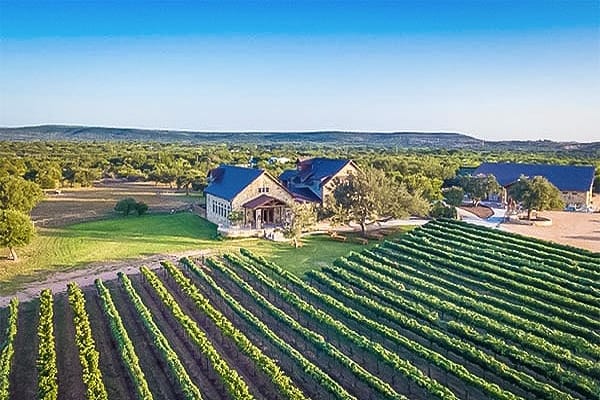
Texoma AVA: North Texas Wine Country on the Rise
Straddling the Red River along the Oklahoma border, the Texoma AVA is one of Texas's most underrated wine regions — a place where French-American hybrids, heat-tolerant reds, and a handful of dedicated producers are quietly building something worth paying attention to.

Most people who follow American wine know the Texas Hill Country. It has the tourism infrastructure, the weekend getaway reputation, and the marketing muscle. Fewer people know about the Texoma AVA — a quieter, less-heralded wine region tucked into the rolling prairies of North Texas along the Red River, just south of the Oklahoma border.
That relative obscurity is starting to change. A growing cluster of dedicated producers, a climate that rewards the right grape varieties, and a location within easy driving distance of the Dallas–Fort Worth metroplex are combining to put Texoma on the radar of Texas wine drinkers who want something beyond the Hill Country's well-worn trail.
Here is what you need to know.
Where Is Texoma?
The Texoma AVA was established by the TTB in 2005, making it one of Texas's newer federally recognized wine regions. It covers approximately 3,000 square miles across Cooke, Grayson, and Fannin counties in North Texas — a stretch of gently rolling prairie and post oak savanna that sits roughly 60 to 80 miles north of Dallas.
The name comes from Lake Texoma, the massive reservoir formed by the Denison Dam on the Red River, which marks the Texas–Oklahoma state line. The lake is one of the largest reservoirs in the United States, and its presence has a moderating effect on the local climate — tempering summer heat and reducing the risk of late spring frosts that can devastate vineyards in more exposed locations.
The region sits at elevations ranging from about 600 to 900 feet — modest compared to the Texas High Plains, but meaningful in a state where altitude is one of the primary tools viticulturists use to manage heat. The soils are a patchwork of sandy loams, clay-heavy red soils, and limestone outcroppings, depending on where you are in the AVA. That variability creates real differences between vineyards and gives producers something interesting to work with.
The Climate Challenge — and the Opportunity
Growing wine grapes in North Texas is not for the faint of heart. The Texoma region experiences hot, humid summers that create real disease pressure — particularly for thin-skinned European varieties like Pinot Noir or Riesling, which simply do not belong here. Winters can be cold enough to damage vines, and spring storms bring the constant threat of hail and late freezes.
But the climate also offers genuine advantages for the right varieties. The long growing season accumulates plenty of heat units, producing grapes with natural ripeness and concentration. The Red River corridor funnels southerly breezes through the region, providing airflow that helps manage humidity and reduce fungal disease. And the proximity to Lake Texoma creates a microclimate buffer that extends the growing season at both ends.
The key is matching variety to place — and Texoma producers have learned, sometimes through hard experience, which grapes thrive here and which ones struggle.
Grapes of the Texoma AVA
Blanc du Bois
If there is one grape that defines the Texoma AVA's white wine identity, it is Blanc du Bois. Developed by the University of Florida in the 1960s and released commercially in 1987, Blanc du Bois is a French-American hybrid bred specifically for hot, humid Southern climates. It carries natural resistance to Pierce's disease — the bacterial infection spread by the glassy-winged sharpshooter that has devastated vineyards across the Gulf Coast — and it ripens reliably even in Texoma's punishing summer heat.
In the glass, Blanc du Bois can be genuinely compelling. At its best, it produces wines with tropical fruit aromas — pineapple, guava, lychee — backed by crisp acidity and a clean, refreshing finish. It is not Chardonnay, and it does not pretend to be. It is a grape that has found its place in the American South, and Texoma producers are making some of the best examples in the state.
Lenoir (Black Spanish)
On the red side, Lenoir — also known as Black Spanish — plays a similar role to Blanc du Bois. It is a hybrid variety with deep roots in Texas wine history, grown in the state since the 19th century. Lenoir produces deeply colored, tannic wines with dark fruit character, earthy notes, and a rustic intensity that can be polarizing but is undeniably distinctive.
Some Texoma producers use Lenoir as a blending component to add structure and color to softer varieties. Others bottle it as a varietal wine, leaning into its bold, uncompromising character. Either way, it is a grape that belongs to this landscape in a way that imported European varieties often do not.
Tempranillo
Tempranillo has emerged as one of the most promising European varieties for the Texas climate, and Texoma is no exception. The grape's thick skin provides some resistance to humidity-related disease, and its natural affinity for warm, dry conditions translates reasonably well to North Texas when vineyard management is careful. Texoma Tempranillo tends toward ripe red and dark fruit — cherry, plum, dried fig — with earthy undertones and firm tannins. The best examples show genuine complexity and age-worthiness.
Viognier
Among white European varieties, Viognier has proven more adaptable to Texas heat than most. Its thick skin offers some disease resistance, and it ripens early enough to avoid the worst of the late-summer humidity. Texoma Viognier can be lush and aromatic — peach, apricot, honeysuckle — with a full-bodied richness that suits the region's warm character. It is not a delicate wine, but it is not trying to be.
Other Varieties
Producers across the AVA also work with Cabernet Sauvignon, Merlot, Cabernet Franc, Muscat Canelli, and a handful of other hybrids and heat-tolerant varieties. Results are mixed — Cabernet Sauvignon in particular can struggle with the humidity — but the best producers are finding ways to make these varieties work through careful site selection, canopy management, and early harvesting to preserve freshness.
Wineries of the Texoma AVA
Brushy Creek Vineyards
One of the most established names in the Texoma AVA, Brushy Creek Vineyards in Alvord has been producing estate wines from its North Texas vineyard for years. The winery focuses on varieties suited to the local climate, with Blanc du Bois and Tempranillo among its standout offerings. The tasting room has a relaxed, unpretentious feel that reflects the region's character — this is not Napa Valley, and nobody is pretending otherwise.
Lone Oak Winery
Located in Burleson — technically on the southern edge of the DFW metro but sourcing fruit from Texoma-area vineyards — Lone Oak has built a following among North Texas wine drinkers looking for approachable, well-made wines at reasonable prices. Their Blanc du Bois is consistently one of the better examples of the variety in the state.
Homestead Winery
With multiple locations across North Texas, including a tasting room in Grapevine, Homestead Winery has become one of the most visible ambassadors for Texoma-area wine. Their portfolio spans a wide range of styles, from dry estate reds to sweeter fruit-forward wines designed for casual sipping. It is a good entry point for visitors new to the region.
Delaney Vineyards
Delaney Vineyards in Grapevine is one of the older and more ambitious producers in the North Texas wine scene. The winery has invested in estate vineyards and a serious production facility, and their wines — particularly the reds — show real craftsmanship. Delaney has been an important voice in establishing the credibility of North Texas wine more broadly.
Cross Timbers Winery
Located in Granbury, Cross Timbers draws on fruit from across the Texoma region and the broader North Texas area. The winery has a strong local following and produces a range of wines that showcase the diversity of what is possible in this climate — from crisp, aromatic whites to structured, age-worthy reds.
How Texoma Fits Into the Texas Wine Story
Texas wine is often told as a two-chapter story: the Hill Country, where the tourism happens, and the High Plains, where most of the grapes are actually grown. Texoma is a third chapter that does not always make it into the narrative — but it should.
What makes Texoma interesting is precisely its difference from those other regions. It is not trying to replicate the Hill Country's limestone-and-cedar aesthetic, and it does not have the High Plains' dramatic elevation and sandy soils. It is a North Texas place, with North Texas terroir — red clay soils, post oak savanna, the moderating influence of a big lake, and a climate that demands grape varieties bred or selected for exactly these conditions.
The producers working here are, by and large, pragmatists. They are not chasing trends or trying to make wines that taste like somewhere else. They are figuring out what grows well in their specific corner of Texas and making the best wine they can from it. That kind of honest, place-driven viticulture is exactly what makes regional American wine worth exploring.
Visiting the Texoma AVA
The Texoma wine region is well-positioned for a day trip or weekend getaway from Dallas–Fort Worth. Most of the major wineries are within 60 to 90 minutes of the metro, and the area around Lake Texoma offers outdoor recreation — boating, fishing, hiking — that pairs naturally with a winery visit.
The best time to visit is spring (April–May) or fall (September–October), when temperatures are more moderate and the landscape is at its most appealing. Summer visits are possible but come prepared for heat. Many wineries host events, live music, and harvest festivals in the fall that are worth planning around.
If you are building a Texas wine itinerary, consider pairing a Texoma visit with a stop in the Hill Country or a drive up to the High Plains. Each region tells a different part of the Texas wine story, and together they paint a picture of a state wine industry that is more diverse, more serious, and more interesting than its reputation often suggests.
The Bottom Line
The Texoma AVA is not going to replace the Hill Country as Texas wine's flagship destination anytime soon. But for drinkers willing to look beyond the obvious, it offers something genuinely worth seeking out — honest wines made from varieties that belong in this climate, by producers who know their land and are not trying to be anything other than what they are.
That is a pretty good definition of what regional American wine is supposed to be.
Explore Topics
Written by
Chuck
Chuck Hoeffler is the founder and editor of The American Vine. He loves tasting and writing about American wine, with a particular focus on regions and wineries that deserve more attention than they typically receive.